
Why water testing matters in Doonan
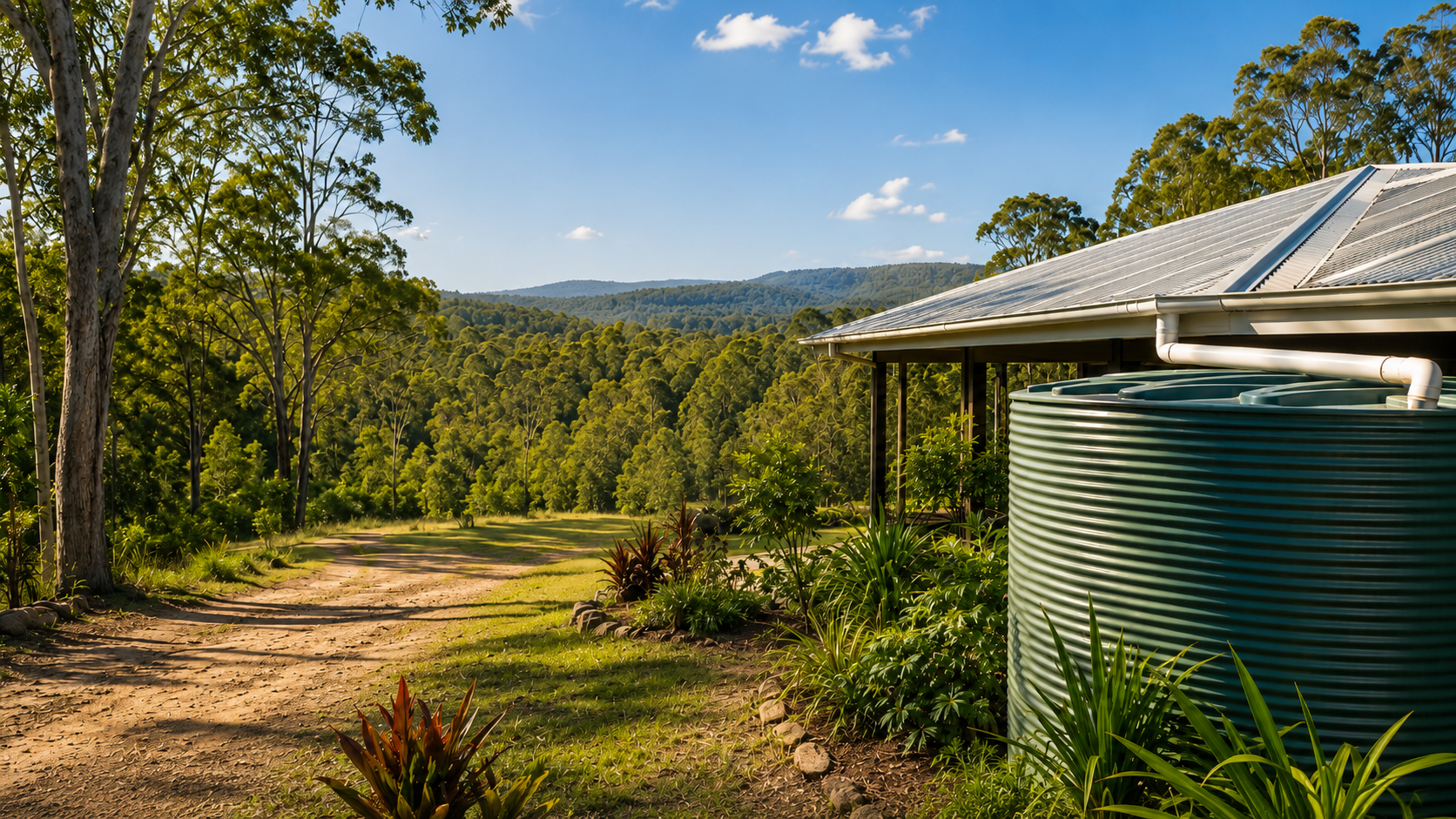
Doonan is acreage country — large bushland blocks, dirt-road frontages, and a strong tradition of self-sufficient water supply. Most Doonan households draw their drinking and household water from one or more rainwater tanks, with many properties also running a bore for gardens, stock troughs, or backup. That independence is a big part of why people choose to live here, but it does mean the water at your kitchen tap depends on what's caught off your roof, what's in your aquifer, and how well your collection system has been maintained since the last big storm. Regular testing gives Doonan owners a practical way to stay ahead of issues like wildlife contamination, leaf-litter coliforms, low pH, mineral staining, or changes after heavy rain.
Local context: Doonan's rainwater catchments often sit under heavy bushland canopy, where leaf litter, birds, bats and possums can increase the risk of E. coli and total coliforms after rain. Bore water on acreage properties can also vary from block to block, especially for pH, iron, manganese, hardness and dissolved minerals.
Likely water sources in Doonan
- Rainwater tanks (primary on most acreage homes)
- Private bore / spear point
- Dam water for stock and irrigation
- Occasional town-water top-up via tanker delivery
Common local water concerns
- Wildlife ingress on tanks (possums, bats, frogs, leaf litter)
- Low pH / acidic rainwater corroding copper plumbing
- Iron and manganese variation in shallow bore water
- E. coli and total coliforms after heavy rain washing roof catchment debris
- Biofilm build-up in older poly tanks and infrequently flushed lines
- First-flush diverters not maintained on bushland blocks
Recommended test packages for Doonan
Based on the typical water-supply profile and property mix in this suburb. You can also mix and match samples — e.g. one tap and one tank — on a single booking.
Sample collection & drop-off
- Use a sterile sample bottle (we supply one when you book).
- Keep your sample cool and out of direct sunlight after collection.
- Bacterial samples must reach the lab within 24 hours of collection.
- Drop-off: 1/37 Gateway Drive, Noosaville QLD 4566 — Monday to Thursday before 2 pm.
Doonan is approximately 15 minutes by car from our Noosaville lab at 1/37 Gateway Drive. Drop-off accepted before 2 pm Monday to Thursday — bacterial samples must reach us within 24 hours of collection for accurate E. coli and coliform analysis.
Local FAQ — Doonan
How often should a Doonan acreage home have its rainwater tank tested?
We recommend at least once per year for routine peace-of-mind, and additionally after any of these triggers: a roof or gutter clean, a major storm, dead wildlife found in the tank, a change in taste or odour, or any household illness with no other obvious cause. Properties with vulnerable family members — infants, elderly, immunocompromised — may benefit from testing every 6 months.
We have both a rainwater tank and a bore at our Doonan property. Which should I test first?
If both are used in the home, both should be tested — they have completely different risk profiles. Rainwater often carries higher microbiological risk, while bore water often needs closer chemical and mineral assessment. We can run both in the same visit using two sample bottles. Most Doonan customers prioritise the tank for drinking water and the bore separately if it's used for cooking, washing, or stock.
My Doonan tank water tastes metallic — what's likely going on?
Metallic taste can come from several causes, including low pH, dissolved minerals, iron, manganese, or interaction with household plumbing. Our Essential Tank Water Test checks pH, conductivity, hardness and other key indicators that help show whether the water is corrosive or mineral-heavy. If bore water is involved, the Essential Bore Water Test is usually the better fit.
I just bought a bushland block at Doonan with an unknown-condition tank. Where do I start?
Start with our Essential Tank Water Test — it gives you a comprehensive baseline across microbiological and chemical parameters. We also recommend a visual inspection of the tank interior (or get a tank cleaner in if it hasn't been opened in over a year). The combination tells you whether the results meet typical drinking water expectations, or whether cleaning, filtration or treatment should be considered.
Can you collect a sample from my Doonan property, or do I need to bring it in?
At this stage, most Doonan customers collect a sterile bottle and drop the sample back to our Noosaville lab. We supply sterile sample bottles and a step-by-step collection guide once you book. If you genuinely can't make the trip, posted samples are accepted — they need to be in our hands within 24 hours of collection for bacterial accuracy.
How long do water testing results take?
Most reports turn around within 3–5 business days from sample receipt. Bacterial tests (E. coli, coliforms) start the day your sample arrives at the lab.
What's the difference between a Basic test and an Essential test?
Basic Water Safety Check ($79 prepaid, was $99) screens for E. coli (Positive/Negative) and Total Coliforms (Positive/Negative) plus pH and Conductivity — answering the question 'is my water safe to drink?'. The Essential Tank Water Test ($143 prepaid, was $179) adds TDS, turbidity, alkalinity, hardness, cations, anions and metals — giving you a broader picture of your rainwater tank's water quality and overall system health.