
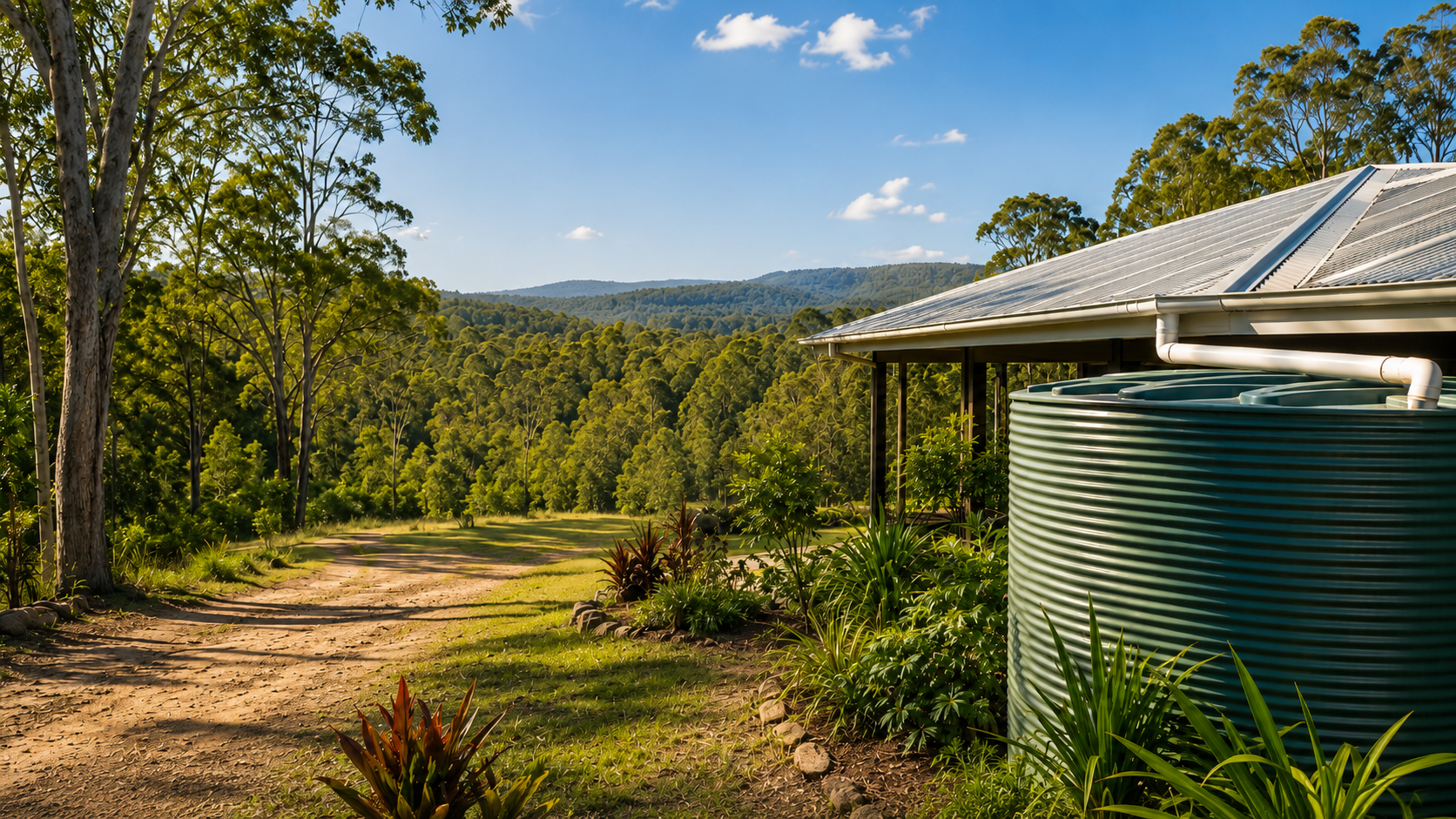
Why water testing matters in Mount Coolum
Mount Coolum sits in a distinctive spot on the Sunshine Coast — its namesake headland dominating the skyline, family blocks below it, and a mix of older coastal homes alongside newer estate streets. Most Mount Coolum properties are on town water for the main supply, but rainwater tanks remain very common across the suburb, typically feeding the garden, the laundry, the outdoor outlets, and occasional household supply on larger blocks. The variation between blocks is striking — wind-exposed slopes close to the headland feel quite different to quieter inland streets — so what's in the stored water can shift noticeably from one Mount Coolum property to the next. Regular testing helps clarify what each tank is actually delivering rather than relying on assumption.
Local context: Mount Coolum's most commonly reported tank-water concerns relate to headland-side weather exposure, hinterland-edge blocks where the tank sees seasonal use, and renovated family homes where the tank/mains plumbing isn't always clearly separated.
Likely water sources in Mount Coolum
- Rainwater tanks on hinterland-edge and headland-side blocks
- Tank-fed garden, laundry and outdoor outlets on family homes
- Larger Mount Coolum blocks running both a tank and town supply
- Occasional bores on lower-lying or older sections — uncommon but worth checking when present
Common local water concerns
- Mount Coolum tanks on blocks closer to the headland with greater wind and weather exposure
- Hinterland-edge homes where tank-fed lines may sit unused through cooler months
- Older Mount Coolum blocks with tank fittings that pre-date current household use patterns
- Mixed tank / town plumbing on renovated Mount Coolum family homes
- Garden taps and outdoor outlets fed by tank without the owner being entirely sure
- Stored rainwater that turns over slowly outside busy school-holiday periods
Recommended test packages for Mount Coolum
Based on the typical water-supply profile and property mix in this suburb. You can also mix and match samples — e.g. one tap and one tank — on a single booking.
Sample collection & drop-off
- Use a sterile sample bottle (we supply one when you book).
- Keep your sample cool and out of direct sunlight after collection.
- Bacterial samples must reach the lab within 24 hours of collection.
- Drop-off: 1/37 Gateway Drive, Noosaville QLD 4566 — Monday to Thursday before 2 pm.
Mount Coolum is approximately 15 minutes by car from our Noosaville lab at 1/37 Gateway Drive. Drop-off accepted before 2 pm Monday to Thursday — or posted samples are accepted as long as they reach us within 24 hours of collection.
Local FAQ — Mount Coolum
Our Mount Coolum block sits close to the headland — does that affect the tank?
Properties closer to the exposed headland tend to see more wind, more salt deposition on roofs, and faster weathering of outdoor fittings than blocks tucked further back. It's rarely a big practical issue inside a sealed tank, but the combination of headland exposure and lower tank turnover can quietly shift the stored water's character over time. Annual testing helps clarify whether the catchment is keeping up.
Our Mount Coolum tank only gets heavy use in school holidays — does the rest of the year matter?
It can. Long quiet stretches don't usually change the water inside a sealed tank dramatically, but rarely-used internal lines can develop biofilm or stale-water taste between busy periods. Running each tap briefly when the household is in active use again, and including the kitchen tap in your sample, gives you a worst-case reading that reflects how the home actually gets used.
We renovated our Mount Coolum home — should we test the tank water before regular use resumes?
Yes. Renovations frequently move plumbing in ways that aren't obvious afterwards, and a tank that wasn't actively used during the build can pick up sediment or microbiological changes while it sits. A test once the new plumbing is in helps clarify which outlets the tank is actually feeding now and confirms the stored water is in good condition before everyday use resumes.
Our Mount Coolum garden tap is fed by tank — is it worth testing if no-one drinks from it?
It's often worth checking even when the line isn't on the main household drinking loop. Garden taps are commonly used by kids and visitors for a casual drink, and the same line typically shares fittings with the rest of the house. The Essential Tank Water Test gives you a clear plain-English picture so you can decide whether the tank is fine as-is, would benefit from a clean, or should be taken offline for that outlet.
Our Mount Coolum home is older — does that change the tank-testing approach?
Older properties often have tank fittings that pre-date the way modern households actually use water — bigger laundry loads, dishwashers, pool top-ups — and the tank setup hasn't necessarily kept pace. Testing gives you a clear baseline of what the current setup is delivering and lets you decide whether a refresh of fittings, screens or the first-flush diverter would be a practical next step.
How long do water testing results take?
Most reports are usually returned within 1–3 days, depending on the test package, sample timing and lab workload. Bacterial tests (E. coli, coliforms) start the day your sample arrives at the lab.
What's the difference between a Basic test and an Essential test?
Basic Water Safety Check ($79 prepaid, was $99) screens for E. coli (Positive/Negative) and Total Coliforms (Positive/Negative) plus pH and Conductivity — answering the question 'is my water safe to drink?'. The Essential Tank Water Test ($143 prepaid, was $179) adds TDS, turbidity, alkalinity, hardness, cations, anions and metals — giving you a broader picture of your rainwater tank's water quality and overall system health.