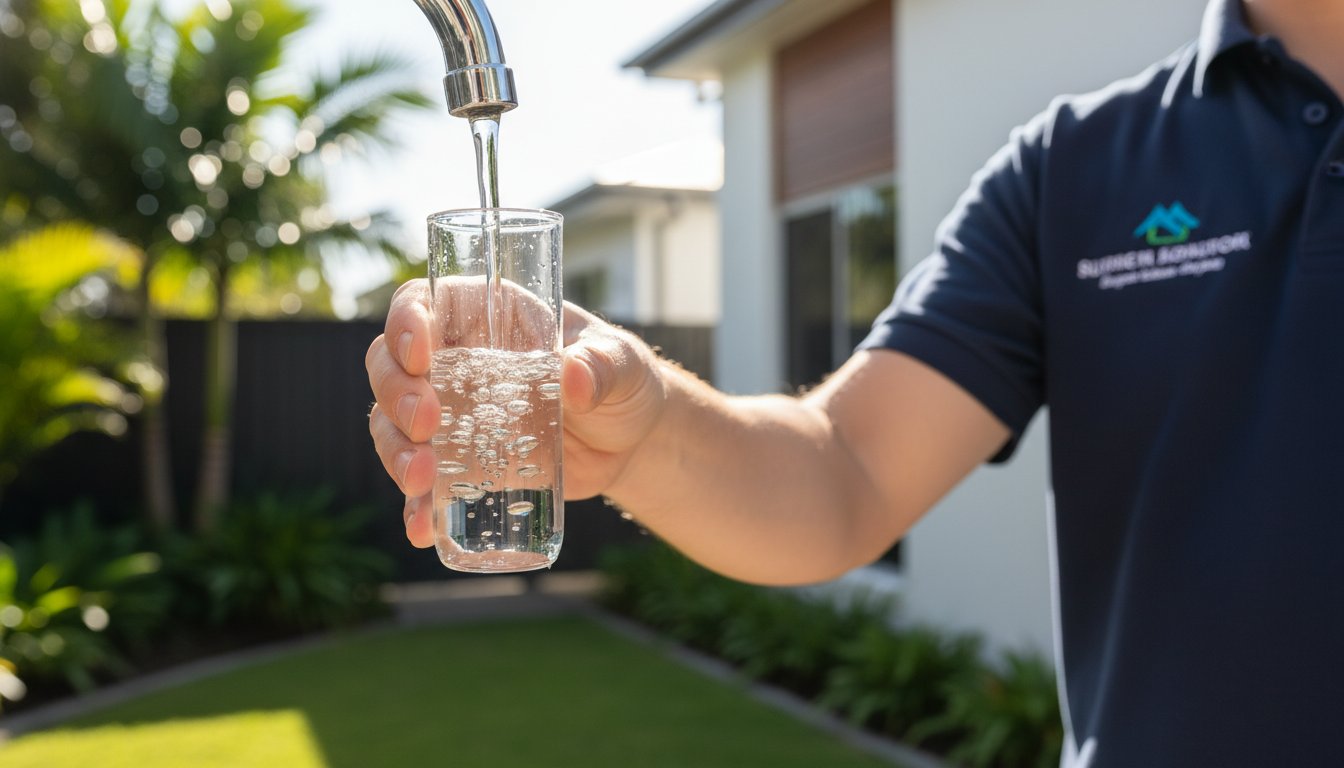
Testing for Nitrates in Bore Water: A 2026 Guide for Australian Homeowners
Can you really trust your bore water just because it looks crystal clear and tastes fresh? For many families in Noosa, Doonan, and Cooroy, a private bore is a vital lifeline, yet the thought of invisible contaminants like nitrates often creates a lingering sense of unease. You want to know your water is healthy for your kids and livestock, but technical lab reports can feel like a foreign language. This is why testing for nitrates in bore water is so vital. It provides the hard evidence you need to ensure your supply aligns with the 2026 Australian Drinking Water Guidelines.
We understand that you're looking for peace of mind, not a chemistry degree. In this guide, you'll learn the simple steps to identify nitrate risks and manage your water quality effectively. At Sunshine Coast Water Testing, we specialise in turning complex data into plain-English summaries that actually make sense for your home in Pomona or Tinbeerwah. We believe that testing identifies the problem, while the solution comes next. If your results show that your water does not meet Australian Drinking Water Guidelines, the experts at Pristine Water Systems Sunshine Coast can provide the right filtration or treatment to ensure your water is at its best.
Key Takeaways
- Understand why nitrates are a "silent" contaminant in groundwater, often entering bore systems through local fertilisers or livestock waste.
- Learn the specific Australian Drinking Water Guidelines (ADWG) limits, including the 50mg/L threshold for infants under three months.
- Discover why you cannot rely on your senses alone, as nitrates have no distinct colour, taste, or smell even at elevated levels.
- Find out how to simplify the process of testing for nitrates in bore water by using a professional Bore Water Analysis kit.
- Gain a clear path forward with the understanding that testing identifies the issue, while professional filtration provides the permanent solution.
What are Nitrates and How Do They Enter Your Bore Water?
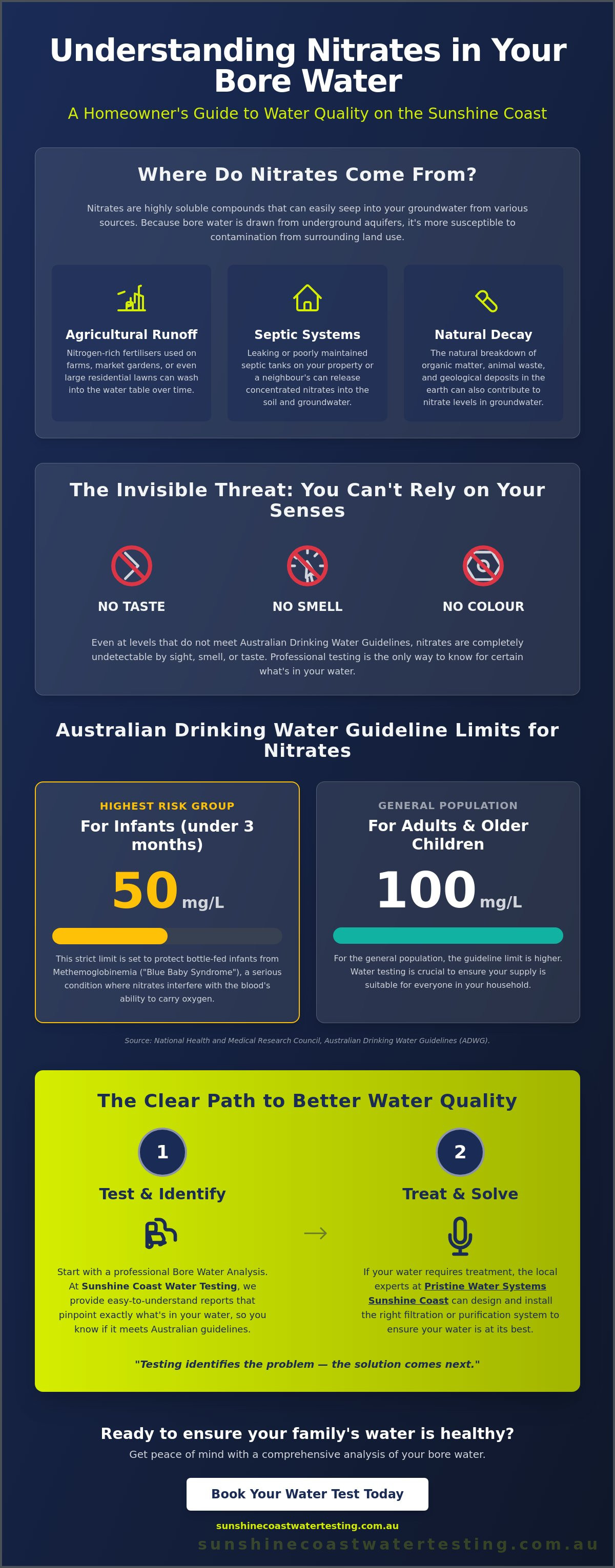
To understand why What are Nitrates matter to your household, it helps to think of them as a double edged sword. In the garden, these naturally occurring inorganic compounds (NO3) are essential nutrients that help your lawn and plants thrive. However, when these same compounds find their way into your drinking supply in high concentrations, they can pose health risks. Because nitrates are highly soluble, they don't just stay where they are put. They dissolve easily in water and move through the environment with surprising speed.
The process usually begins on the surface. When it rains in areas like Cooroy or Doonan, the water filters down through the soil and into the underground aquifer. This is known as leaching. If the soil contains high levels of fertilisers or animal waste, the rainwater carries those nitrates straight down into the groundwater. For many homeowners, testing for nitrates in bore water is the only way to know if this invisible process is affecting their private supply, as the land use around your property directly influences what ends up in your tap.
Common Sources of Nitrate Contamination
Nitrates don't just appear out of nowhere. They are typically the result of human activity or natural biological cycles. Common sources include:
- Agricultural Runoff: Nearby farms or even intensive home vegetable gardens often use nitrogen rich fertilisers that easily wash into the water table.
- Septic Systems: A leaking or poorly maintained septic tank on your property, or even a neighbour's property, can release concentrated nitrates into the surrounding soil.
- Natural Decay: As organic matter and geological deposits break down within the earth, they can release low levels of nitrates into the groundwater naturally.
Why Bore Water is More at Risk Than Tank Water
You might wonder why your bore is more susceptible than a rainwater tank. While tank water relies on roof runoff, groundwater acts as a long term "sink" for chemicals. Surface pollutants can take years to migrate through the soil, meaning your bore water might reflect land use from several seasons ago. Many people assume that a deep bore is protected from surface seepage, but that isn't always the case. Faulty bore casing or porous rock layers can allow contaminated surface water to bypass natural filters and enter your supply directly.
At Sunshine Coast Water Testing, we provide a clear Bore Water Analysis that cuts through the jargon. We believe that water testing identifies the problem — the solution comes next. If your results show that your supply does not meet Australian Drinking Water Guidelines and should be addressed, Pristine Water Systems Sunshine Coast can help you install the right filtration to keep your family safe.
Understanding the Health Risks and Australian Standards
When you look at the Australian Drinking Water Guidelines, it becomes clear that water safety isn't a one-size-fits-all matter. These standards, set by the National Health and Medical Research Council, provide two distinct thresholds for nitrate levels based on who is consuming the water. The first is a 50mg/L limit designed specifically to protect bottle-fed infants under three months of age. For adults and older children, the limit increases to 100mg/L. If your results show levels above these figures, it means your supply does not meet Australian Drinking Water Guidelines and should be addressed. We always remind our clients that water testing identifies the problem; the solution comes next.
Methemoglobinemia (Blue Baby Syndrome)
This condition is the primary reason for the strict 50mg/L limit. When infants consume high levels of nitrates, their bodies convert them into nitrites. These nitrites then interfere with the blood's ability to carry oxygen throughout the body. Because babies have less developed digestive systems, they are the most vulnerable group. In rare cases, this leads to a bluish skin colour, particularly around the mouth, nose, and eyes. It is a serious concern, but one that is easily managed through regular monitoring. If you're concerned about your family's health, booking a professional analysis is the most reliable way to get definitive answers.
Long-term Health and Livestock Considerations
While infants are at the highest risk, adults aren't entirely immune. People with specific medical conditions or those who are immunocompromised should pay close attention to their nitrate levels. It isn't just about human health, either. Families in the Noosa and Pomona hinterlands often rely on bore water for their pets and livestock. Thirsty cattle or horses can consume large volumes of water daily. If nitrate levels are high, it can lead to poor health or reduced growth in your animals. Regular testing for nitrates in bore water ensures that every member of your household, whether they have two legs or four, is drinking water that meets the right standards.
At Sunshine Coast Water Testing, we don't just hand over a sheet of raw data. We provide a plain-English summary so you know exactly what your results mean for your specific situation. If we find an issue, we can then point you toward Pristine Water Systems Sunshine Coast to discuss filtration options. This ensures your water is brought back into alignment with national standards efficiently and effectively.
The Invisible Threat: Why You Can’t Rely on Your Senses
It is a common misconception that clear water is naturally safe water. If your bore water comes out of the tap looking sparkling and tasting fresh, you might assume everything is fine. However, nitrates are what we call an "invisible" contaminant. Unlike iron, which leaves unsightly orange stains on your laundry, or sulphur, which gives off a distinct rotten egg smell, nitrates have no colour, taste, or odour. Even at levels that exceed the Australian Drinking Water Guidelines, you won't be able to detect them without proper equipment.
Because you can't rely on your senses, a proactive "health check" approach is the best way to manage your rural supply. Testing for nitrates in bore water should be a routine part of your property maintenance, much like servicing your pump or clearing your gutters. It is about removing the guesswork so you can use your water with total confidence. Taking this step ensures that your household isn't being exposed to hidden issues that only a laboratory can see.
Signs That Suggest You Should Test Immediately
While regular checks are important, certain events should trigger an immediate test. If you've recently experienced heavy rainfall or flooding in the Tinbeerwah or wider Sunshine Coast region, surface contaminants may have washed into your aquifer. Similarly, if a neighbour has started new cropping or introduced more livestock, the change in land use can impact your water quality. Most importantly, if you have a new baby in the house or are planning a pregnancy, knowing your nitrate levels is a vital step for their well-being.
Professional Lab Analysis vs. DIY Test Strips
You might see DIY test kits at the local hardware store, but these often have significant limitations. While they can give a rough indication, they usually lack the precision needed to detect exact mg/L levels required by the national guidelines. A professional water analysis is the only way to receive a valid Certificate of Analysis. At Sunshine Coast Water Testing, we take that technical data and turn it into a plain-English summary you can actually use to make decisions for your home.
Always keep in mind that water testing identifies the problem; the solution comes next. If your report shows that your water does not meet Australian Drinking Water Guidelines and should be addressed, we recommend contacting Pristine Water Systems Sunshine Coast. They provide the practical solutions, such as specialised filtration, needed to bring your supply back into alignment with national standards.
How to Organise Testing for Nitrates in Bore Water
Ready to find out what's in your water? For many homeowners across the Sunshine Coast, the most daunting part of the process is simply knowing how to start. When you decide to begin testing for nitrates in bore water, the process is designed to be as simple and functional as possible. Ordering a specific Bore Water Analysis kit is a straightforward task that removes the mystery from your supply. By choosing Sunshine Coast Water Testing, you aren't just getting a laboratory result; you're getting a partner who helps you understand what those results mean for your family and your property.
It's worth remembering that groundwater isn't static. Nitrate levels can fluctuate based on the time of year and local weather patterns. Heavy summer rains can flush surface contaminants into your aquifer, while long dry spells might concentrate existing minerals. We recommend testing your bore at different times of the year to get a truly accurate picture of your water's health across all seasons. This proactive approach ensures you're never caught off guard by seasonal changes in land use or rainfall.
Step-by-Step Sampling Guide
To get the most accurate reading, you need to follow a few simple steps when collecting your sample. This ensures the data we provide is a true reflection of your aquifer's quality.
- Run the bore: Let your bore run for at least five to ten minutes. This clears out any stagnant water sitting in the pipes and ensures you are sampling fresh aquifer water.
- Use a sterile container: Always use the specific container provided by the lab. Using an old jar or a rinsed plastic bottle can lead to cross-contamination and skewed results.
- Label clearly: Use a waterproof pen to note the date, time, and the specific bore location on the bottle.
- Deliver promptly: Get the sample to the lab as quickly as possible. While nitrates are relatively stable, other indicators in the water can change over time, and speed ensures the highest accuracy.
What to Expect in Your Results
Once the lab analysis is complete, you will receive a Certificate of Analysis. This document lists various minerals and chemicals, usually measured in milligrams per litre (mg/L). While these numbers are essential for technical accuracy, they can be confusing if you aren't a scientist. This is where our plain-English summary provides real value. We explain clearly if your water meets the national standards or if it falls into the category where it does not meet Australian Drinking Water Guidelines and should be addressed.
Always keep our core philosophy in mind: water testing identifies the problem — the solution comes next. If your report highlights an issue with nitrates, Pristine Water Systems Sunshine Coast can offer the right filtration or treatment systems to fix it. To take that first step toward clarity, you can book a water test today to ensure your supply is safe for the long term.
Interpreting Results and Implementing Solutions
At this stage, you have the data in front of you. We always remind our clients of one core philosophy: testing identifies the problem; the solution comes next. If your report confirms that your nitrate levels are elevated, it simply means your supply does not meet Australian Drinking Water Guidelines and should be addressed before it is used for drinking or cooking. This isn't a cause for panic, but it is a call to action. Once Sunshine Coast Water Testing has pinpointed the specific levels through professional testing for nitrates in bore water, Pristine Water Systems Sunshine Coast can step in to provide the necessary filtration or purification solutions to bring your water back to standard.
The transition from a lab report to a working solution should be seamless. We don't believe in leaving you with a pile of raw data and no direction. By linking our detailed analysis with practical, local expertise, we ensure that the path to better water quality is clear and achievable for every homeowner. Whether you are in Noosa or the hinterland, the goal is always the same: water that you can trust for your family and your future.
Effective Treatment Options
Not all water filters are created equal. Regarding chemical contaminants like nitrates, you need specific technology to get the job done effectively. Standard carbon filters often fall short here.
- Reverse Osmosis (RO) systems: These are widely considered the most effective way to remove nitrates at the tap. They use a semi-permeable membrane to strip away dissolved solids, leaving you with high-quality drinking water.
- Ion exchange systems: This process works similarly to a water softener, using specialised resins to swap nitrate ions for harmless ones.
Ongoing Management for Peace of Mind
Securing your water quality isn't a one-off event. For families in rural pockets like Doonan and Pomona, we recommend an annual testing schedule to monitor any shifts in the aquifer. Environmental factors and land use are always changing, so staying ahead of the curve is the best way to ensure long-term peace of mind. Regular maintenance of your filtration equipment is also vital to ensure it continues to perform at its peak. By partnering with Pristine Water Systems Sunshine Coast for system checks and utilising a professional water testing sunshine coast service, you can be sure your household supply remains reliable year after year. Your water is your most precious resource; looking after it is an investment in your home's health.
Secure Your Family's Water Quality Today
Ensuring your household supply aligns with the 2026 Australian Drinking Water Guidelines is the best way to protect your family from invisible contaminants. Because you can't see, taste, or smell them, testing for nitrates in bore water is the only reliable method to confirm your supply is healthy for everyone from infants to livestock. We take the complexity out of the process by providing NATA accredited laboratory analysis paired with trusted local Sunshine Coast expertise.
We believe you deserve clarity, which is why our reports include plain-English summaries that explain exactly what your results mean. It's a simple process: testing identifies the problem, and the solution comes next. If your results show your water does not meet Australian Drinking Water Guidelines and should be addressed, Pristine Water Systems Sunshine Coast can provide the right filtration to fix it. Taking this small step now ensures a reliable and healthy water source for your property for years to come.
Book your professional bore water test today for peace of mind.
Frequently Asked Questions
Can I boil my bore water to remove nitrates?
No, you cannot remove nitrates by boiling your water. In fact, boiling is counterproductive because it causes some of the water to evaporate while the nitrates remain behind. This process actually increases the concentration of the contaminant in your pot. If your test results show that your supply does not meet Australian Drinking Water Guidelines and should be addressed, you'll need a specialised solution like reverse osmosis instead.
How often should I test my bore water for nitrates?
We recommend testing for nitrates in bore water at least every two years. If you have a shallow bore or live in an area with intensive agriculture like Cooroy or Pomona, annual checks are a better choice. You should also consider an immediate test after significant flooding or heavy rainfall events on the Sunshine Coast, as these can flush surface pollutants into your groundwater supply quite quickly.
Is nitrate in bore water dangerous for adults?
For most adults, nitrate levels up to 100 mg/L are considered acceptable under the Australian Drinking Water Guidelines. However, if levels exceed this threshold, the water should be addressed. Vulnerable groups, such as pregnant women or individuals with specific medical conditions, should be particularly cautious. Regular monitoring ensures you have the data needed to make informed health decisions for everyone in your household.
What is the difference between nitrate and nitrite?
Nitrate (NO3) is the most common form found in groundwater, while nitrite (NO2) is a much more reactive compound. In the human body, nitrates are converted into nitrites, which is what interferes with oxygen transport in the blood. While our Bore Water Analysis checks for both, nitrates are the primary indicator of long term contamination from fertilisers or septic systems in rural areas.
Will a standard carbon filter remove nitrates from my water?
No, a standard carbon filter or a simple benchtop jug won't remove nitrates from your supply. These filters are excellent for removing chlorine and improving taste, but they aren't designed to catch dissolved inorganic compounds. Remember that water testing identifies the problem; the solution comes next. To effectively manage high levels, you should contact Pristine Water Systems Sunshine Coast to discuss specialised filtration.
Can I use bore water with high nitrates for my vegetable garden?
Yes, high nitrate levels are often beneficial for your garden as they act as a natural fertiliser for many plants. However, you should be cautious if you are growing leafy greens like spinach or lettuce, as these plants can accumulate nitrates in their leaves. If you plan to eat these vegetables regularly, it's a good idea to have a clear understanding of your water's chemical makeup first.
Does high nitrate level affect the smell or colour of my water?
No, nitrates are completely colourless, tasteless, and odourless. This is what makes them such a hidden threat for homeowners. Your water might look crystal clear and taste perfectly fine even if it contains levels that exceed national safety standards. This is why professional testing for nitrates in bore water is the only way to truly know if your supply aligns with the Australian Drinking Water Guidelines.
What is the safe level of nitrate for livestock?
Most livestock can tolerate higher nitrate levels than humans, with up to 400 mg/L generally considered safe for mature beef cattle. However, younger animals and pregnant stock are much more sensitive. If your bore water analysis shows high concentrations, it can lead to reduced growth or poor health in your animals. Sunshine Coast Water Testing provides plain-English summaries to help you understand these specific risks for your property.

Article by
Stephen McDougall
Stephen McDougall is the owner of Pristine Water Systems Sunshine Coast and Sunshine Coast Water Testing, specialising in water quality, filtration, and tank systems. He is known for delivering clear, easy-to-understand advice and practical solutions to help clients maintain safe, reliable water.
Disclaimer
The information provided in this article is for general guidance only and is not a substitute for professional water testing or site-specific advice. Water quality can vary between properties. For accurate results and recommendations, we recommend professional testing and assessment.