
Why water testing matters in Lake MacDonald
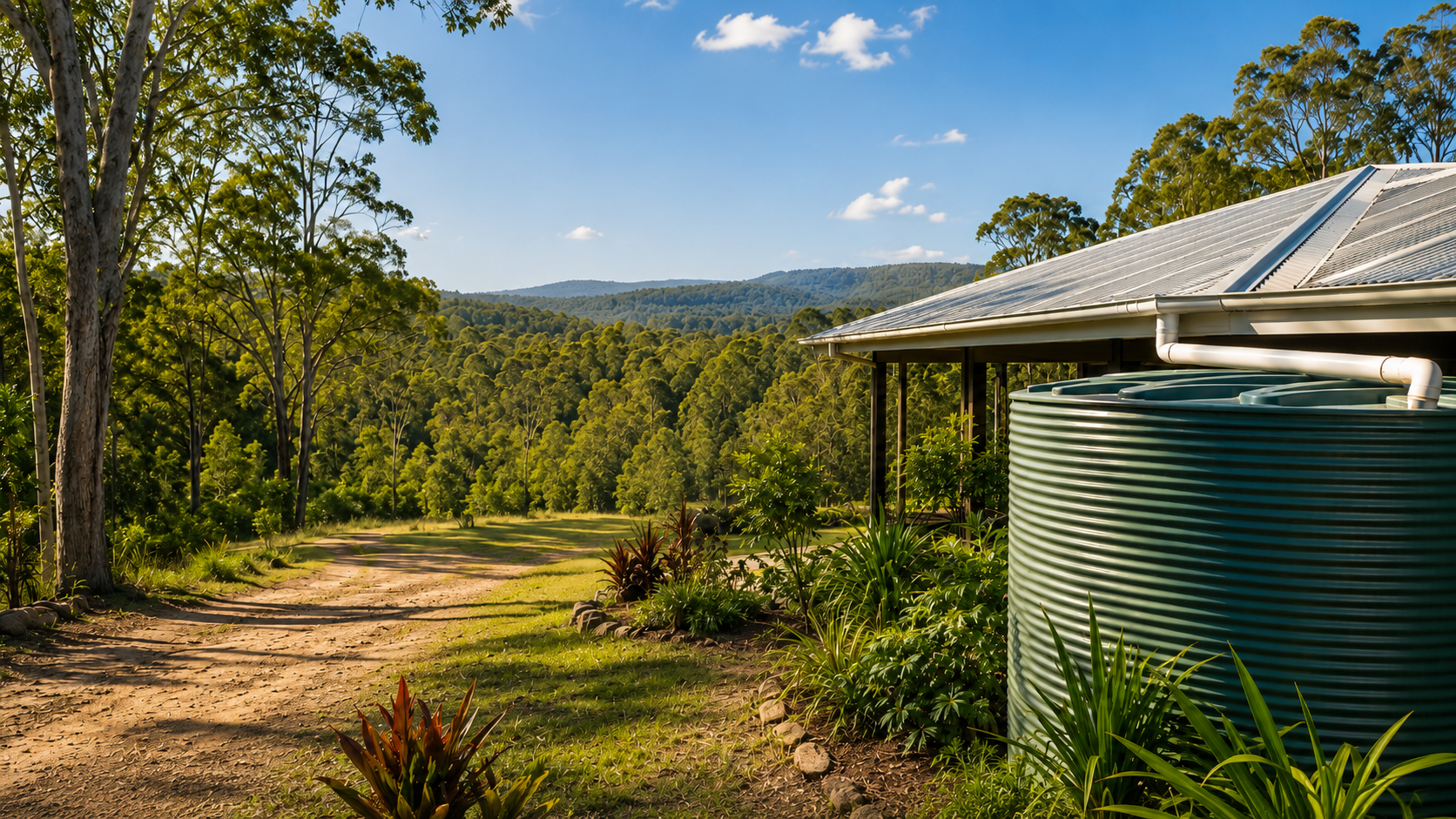
Lake MacDonald is one of the Noosa Hinterland's most distinctive rural-residential pockets — large acreage blocks, dense bushland borders, dam catchments, and a strong tradition of self-sufficient water supply. The vast majority of Lake MacDonald households depend on private water sources for everyday drinking, cooking, bathing, and household use. That self-sufficiency is part of what makes the area special, but it also means the water quality at your tap reflects what's happening on your roof, in your tank, in your aquifer, and across your catchment area. Periodic independent water testing gives Lake MacDonald property owners a practical, evidence-based way to understand their water and make informed decisions about treatment, retesting, or upgrades.
Local context: Lake MacDonald's combination of bushland canopy, acreage layouts, dam-line catchments and older rural plumbing creates a distinct mix of water quality risks. Rainwater tanks here often face elevated bacterial loading after heavy rain, while bore water on the same properties can vary widely in pH, iron, manganese and dissolved minerals from one block to the next. Properties near unsealed access roads, dams, bushland borders or creek lines should test more regularly than urban homes.
Likely water sources in Lake MacDonald
- Rainwater tanks (primary on most acreage and rural-residential homes)
- Private bore / spear point — common on larger blocks
- Dam water for stock, garden and irrigation
- Spring-fed catchments on some properties
- Occasional carted water top-up during prolonged dry periods
Common local water concerns
- Roof catchment contamination from bushland canopy — leaves, possums, bats, frogs and bird droppings
- E. coli and total coliforms after heavy rain washing accumulated debris into the tank
- Stagnant water sitting in low-use pipework on weekenders and partially occupied homes
- Bore water mineral variation — iron, manganese, hardness, pH and conductivity can vary block-to-block in this area
- Older rural plumbing with poly tanks, mixed copper and galvanised lines, and infrequently flushed dead-legs
- Catchment debris from unsealed driveways, dam overflow, creek-line runoff and nearby bushland
- First-flush diverters missing, blocked, or not maintained on acreage blocks
- Property managers and landlords needing clear water-quality records for rental and short-stay homes
Recommended test packages for Lake MacDonald
Based on the typical water-supply profile and property mix in this suburb. You can also mix and match samples — e.g. one tap and one tank — on a single booking.
Sample collection & drop-off
- Use a sterile sample bottle (we supply one when you book).
- Keep your sample cool and out of direct sunlight after collection.
- Bacterial samples must reach the lab within 24 hours of collection.
- Drop-off: 1/37 Gateway Drive, Noosaville QLD 4566 — Monday to Thursday before 2 pm.
Lake MacDonald is approximately 15–20 minutes by car from our Noosaville lab at Unit 1/37 Gateway Drive, Noosaville QLD 4566. Drop-off is accepted before 2 pm Monday to Thursday — bacterial samples must reach the lab within 24 hours of collection for accurate E. coli and coliform analysis. If you can't make the drive, we accept express-posted samples that arrive within the 24-hour window.
Local FAQ — Lake MacDonald
Do you test tank water in Lake MacDonald?
Yes — rainwater tank testing is one of our most-requested services for Lake MacDonald properties. We supply a sterile sample bottle and a step-by-step collection guide, then run a full panel covering microbiological indicators (E. coli, total coliforms), pH, conductivity, hardness, and other key parameters that help reveal whether your tank water is clean, mineral-heavy, or showing signs of contamination from the catchment.
Do you test bore water in Lake MacDonald?
Yes. Bore water on Lake MacDonald acreage properties can vary noticeably from block to block, particularly for iron, manganese, hardness, pH and conductivity. The Essential Bore Water Test focuses on the parameters most relevant to private bore supplies and helps identify whether filtration, pH correction, or further investigation may be appropriate.
How often should private tank or bore water be tested?
We recommend a baseline test for any newly purchased Lake MacDonald property, then at least annually for routine peace-of-mind. Additional testing is recommended after any of: a heavy storm or extended dry period, a tank or roof clean, dead wildlife found in the tank, a change in taste, odour or colour, or any household illness with no other obvious cause. Families with infants, elderly, or immunocompromised members may benefit from testing every 6 months.
What should I do if E. coli or coliforms are detected on my Lake MacDonald property?
Detection of E. coli or total coliforms indicates a microbiological risk that should be addressed. Practical next steps usually involve identifying the contamination source (catchment, tank interior, pipework), considering a tank clean, addressing any catchment hygiene issues such as missing or blocked first-flush diverters, and — where appropriate — UV disinfection or filtration. Retesting after corrective action is strongly recommended. Your report will include practical next-step guidance specific to your result.
Can property managers use this for rural rental and acreage rental properties?
Absolutely. Property managers, owners of short-stay accommodation, and managers of rural rental homes regularly use independent water testing to maintain clear water-quality records for tenants and incoming buyers. The reports give a date-stamped snapshot of what was found at the time of testing and what next steps were recommended — useful for routine due diligence and inspections.
Do you provide treatment advice after the test?
Our reports include practical next-step guidance based on what was found in your sample. Where bacteria, low pH, mineral issues or other concerns are detected, the report will note what treatment categories are typically considered — for example UV disinfection, tank cleaning, BioCleanse pipework treatment, filtration review, pH correction, or retesting. We don't make treatment guarantees — every property is different — but we give you clear, actionable information to take to a plumber or treatment specialist.
Where do I drop off my Lake MacDonald water sample?
Samples can be dropped off at our Noosaville lab — Unit 1/37 Gateway Drive, Noosaville QLD 4566. Lake MacDonald is approximately 15–20 minutes' drive. Drop-off is open before 2 pm Monday to Thursday so that bacterial samples can be processed within their 24-hour collection window. Sterile bottles and a collection guide are supplied once you book.
Do you test for chemicals like pesticides or heavy metals?
Our Essential Tank and Bore Water Tests focus on the parameters most relevant to typical private supply water — microbiological indicators, pH, conductivity, hardness, and core chemistry. Specialised testing for individual pesticides, herbicides or specific heavy metals beyond our standard panel can be arranged via referral. If you suspect a specific contamination event (for example, spray drift or a tank cross-contamination), let us know when booking and we'll point you to the most appropriate test.
How long do water testing results take?
Most reports are usually returned within 1–3 days, depending on the test package, sample timing and lab workload. Bacterial tests (E. coli, coliforms) start the day your sample arrives at the lab.
What's the difference between a Basic test and an Essential test?
Basic Water Safety Check ($79 prepaid, was $99) screens for E. coli (Positive/Negative) and Total Coliforms (Positive/Negative) plus pH and Conductivity — answering the question 'is my water safe to drink?'. The Essential Tank Water Test ($143 prepaid, was $179) adds TDS, turbidity, alkalinity, hardness, cations, anions and metals — giving you a broader picture of your rainwater tank's water quality and overall system health.