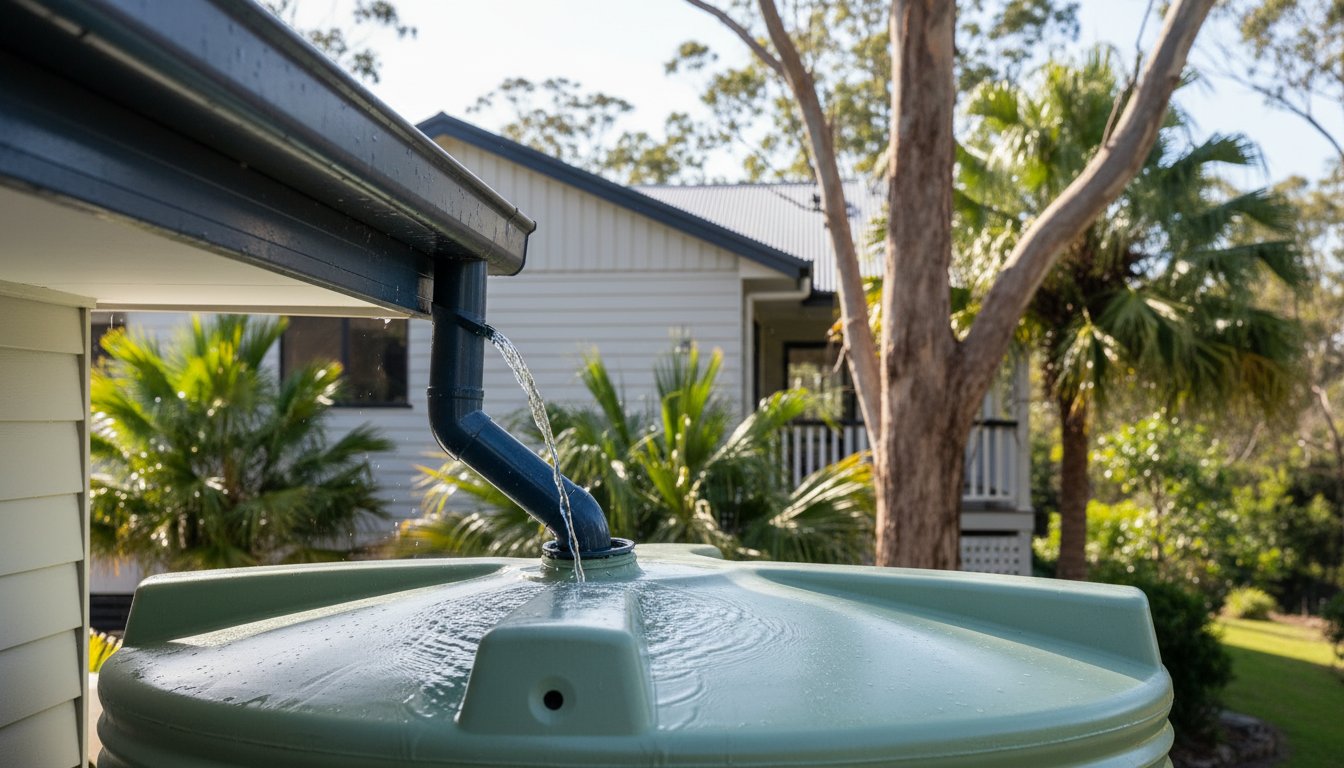
Effects of Roof Material on Rainwater Quality: The Homeowner’s Myth-Busting Guide
Have you ever stopped to consider that your roof is actually the very first filter in your home's drinking water system? Whether you live in Noosa, Cooroy, or out in Pomona, the effects of roof material on rainwater quality dictate the safety of every drop in your tank. Many homeowners across the Sunshine Coast worry about a strange metallic taste or notice brown discolouration after a storm, wondering if old lead flashing or aging materials are to blame. It's a valid concern, especially with the new Lead-Free mandate for plumbing products that came into effect in Australia on 1 May 2026.
We agree that your family's health shouldn't be a guessing game. This guide helps you move past the myths to find out what's really happening in your gutters and how to ensure your supply meets the Australian Drinking Water Guidelines. At Sunshine Coast Water Testing, we believe that testing identifies the problem; the solution comes next. If your results show that your water does not meet Australian Drinking Water Guidelines and should be addressed, Pristine Water Systems Sunshine Coast provides the expert filtration and tank cleaning needed to fix it. From Doonan to Tinbeerwah, we're here to help you achieve total peace of mind through clear testing, plain-English reporting, and practical solutions.
Key Takeaways
- Understand why rainwater is rarely pure once it hits your roof and how your catchment area acts as a collection tray for local pollutants.
- Learn about the specific effects of roof material on rainwater quality, from lead risks in older metal roofs to the way concrete tiles can naturally balance water pH.
- Discover the essential role of first-flush diverters and regular gutter maintenance in preventing debris and contaminants from reaching your household tanks.
- Identify the common signs of heavy metal leaching and biological impacts to ensure your water supply aligns with the Australian Drinking Water Guidelines.
- Realise why a visual inspection is never enough and how professional testing identifies the problem so that a tailored solution can be implemented.
Is Rainwater Always Pure? Myth-Busting the Catchment Process
Many homeowners in Cooroy and Doonan grew up with the idea that rain falling from the sky is the cleanest water available. It feels natural, fresh, and free. However, the reality of rainwater harvesting is a bit more complex. By the time that water reaches your glass, it has interacted with the atmosphere and your home's exterior, fundamentally changing its chemical makeup. Your roof isn't just a lid for your house; it's a massive collection tray that catches everything the environment throws at it.
The Journey from Sky to Tank
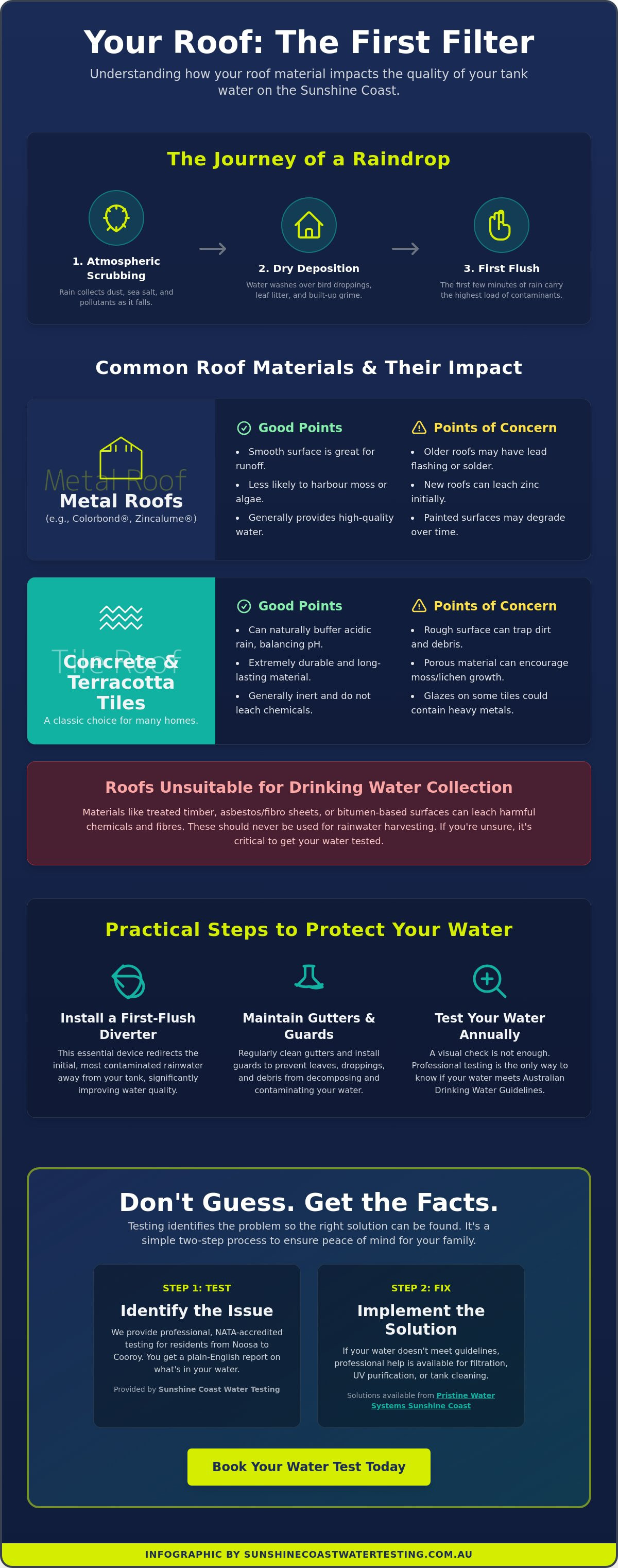
Rain doesn't stay pure for long. As raindrops fall, they perform a process called atmospheric scrubbing. They act like tiny sponges, soaking up dust, smoke particles, and sea salt spray, which is particularly common across the Sunshine Coast. Once the rain hits your roof, it meets "dry deposition." This is the layer of bird droppings, leaf litter, and wind-blown soil that accumulates between rain events.
The first five minutes of a downpour are the most critical. This initial runoff carries the highest concentration of accumulated pollutants directly toward your tank. If you don't have a functional first-flush diverter, this concentrated "soup" of environmental debris ends up in your drinking supply. This is why the physical state of your catchment area is the primary factor in your overall water health.
Why Your Roof Material Matters More Than Your Filter
It's a common mistake to think a basic benchtop filter can fix everything. While filters are helpful, they're actually a secondary line of defence. The primary influence on your water safety is your catchment surface. The effects of roof material on rainwater quality can be profound, as different materials react differently to the slight acidity of natural rain. Metal roofs might leach zinc or copper, while older homes may still have lead flashing that quietly degrades over time.
Chemical leaching is often invisible, unlike the physical debris you might see floating in a bucket. You can't always smell or taste heavy metals, but they can still impact your long-term health. Ultimately, catchment quality is the absolute baseline for water safety. If the source is compromised, your filtration system has to work significantly harder to keep up.
At Sunshine Coast Water Testing, we often find that tank water does not meet Australian Drinking Water Guidelines and should be addressed. We believe that testing identifies the problem so you can take the right path forward. Once we've provided a plain-English summary of your results, Pristine Water Systems Sunshine Coast can provide the necessary solutions, such as professional tank cleaning or advanced filtration, to ensure your water is right for your family. If you're concerned about your catchment, you can book a water test to get the facts about your specific roof type.
Comparing Common Australian Roof Materials and Their Impact
In Australia, we have a long-standing love affair with metal roofs. Whether your home in Noosa or Pomona is topped with Colorbond or Zincalume, these smooth surfaces are often seen as the gold standard for rainwater harvesting. However, even the most modern materials have quirks that can change the profile of your tank water. Understanding the effects of roof material on rainwater quality is the first step toward a healthier home and a more reliable water supply.
Metal Roofs: The Australian Standard
Metal roofing is popular for a reason. Its smooth, non-porous surface allows rain to flow quickly into gutters, leaving little time for the water to absorb contaminants. An in-depth study on roofing materials confirms that these surfaces generally produce higher-quality runoff compared to rougher alternatives.
The hidden danger often lies in the details. Older regional homes may still have lead-based solder or lead flashing around chimneys and vents. As these materials weather, they can leach heavy metals into your supply. Additionally, during a hot Sunshine Coast summer, metal roofs can reach high temperatures. This heat can transfer to the water sitting in your pipes or gutters, potentially influencing the initial taste and bacterial growth before it even reaches the tank.
Concrete and Terracotta Tiles
Concrete and terracotta tiles are common in areas like Tinbeerwah, but they present a different set of challenges. Because tiles are porous, they tend to hold onto moisture. This creates a perfect environment for the growth of lichen, moss, and algae. These rougher surfaces also act like a magnet for dust and organic debris, which can lead to higher turbidity (cloudiness) in your tank.
Over time, the protective coatings on concrete tiles can degrade. This sediment ends up at the bottom of your tank, creating a "sludge" layer that can affect water clarity. If you notice an earthy taste or discolouration after a heavy downpour, your tiled catchment is likely the culprit. If your water does not meet Australian Drinking Water Guidelines and should be addressed, Pristine Water Systems Sunshine Coast provides professional tank cleaning to remove this built-up sediment.
Old "Fibro" and Asbestos Catchments
In older pockets of the coast, we still see "fibro" or asbestos cement roofing. While these were standard decades ago, deteriorating asbestos sheeting can release fibres into your catchment system. If you have an older roof that is starting to show its age through cracking or "furring," it's vital to have it professionally assessed. In many cases, a severely weathered asbestos roof may mean the catchment is no longer suitable for drinking water.
At Sunshine Coast Water Testing, we believe that water testing identifies the problem, while the solution comes next. We provide plain-English summaries so you can make informed decisions about your home's infrastructure. If you're concerned about how your aging roof is impacting your family's health, you should book a water test as a sensible first step toward total peace of mind.
Chemical and Biological Impacts on Rainwater Quality
The interaction between a raindrop and your roof is more than just a physical bounce. It is a complex chemical exchange. The effects of roof material on rainwater quality determine whether your water is soft and acidic or hard and alkaline. For instance, natural rainwater is slightly acidic. When it lands on concrete tiles, the alkaline nature of the material can help neutralise that acidity. This shift in pH can actually protect your household plumbing from corrosion, though it may result in slightly harder water that affects how well soaps and detergents lather.
Heavy Metals and Your Health
While pH changes are generally manageable, heavy metal leaching is a more serious consideration for homeowners in Noosa and Cooroy. Older homes with lead flashings or lead-based paints can cause water to not meet Australian Drinking Water Guidelines (ADWG) standards. Similarly, zinc runoff from older galvanised surfaces can impart a distinct metallic taste, though it is usually a nuisance rather than a health risk at typical levels. It is vital to remember that most heavy metals are often tasteless and invisible, meaning you can't rely on your senses alone to detect their presence.
The Australian Drinking Water Guidelines provide a clear framework for what constitutes acceptable levels of these elements in your supply. Following the guidelines for safe roofing materials is a great way to minimise these risks at the source. If your test results indicate that your water does not meet Australian Drinking Water Guidelines and should be addressed, Pristine Water Systems Sunshine Coast offers targeted filtration and purification systems to bring your supply back into alignment.
Microbiological Risks and Roof Texture
The physical texture of your roof also plays a massive role in its biological health. Rough, porous materials like old terracotta or concrete tiles provide "grip" for organic matter to settle. This creates a food source for bacteria and attracts local wildlife like birds and possums. Their droppings introduce the risk of E. coli and coliforms into the catchment area. In contrast, smoother roofs like Colorbond lead to lower bacterial loads in the tank because they dry faster and offer fewer places for pathogens to hide.
Understanding these risks is the first step toward a safer home. At Sunshine Coast Water Testing, we provide a Standard Drinking Water Test that looks specifically at these chemical and biological markers. We don't just hand over a list of numbers; we provide a plain-English summary that explains exactly what is happening in your tank. We believe that water testing identifies the problem; the solution comes next.
Practical Steps to Protect Your Tank Water Quality
Knowing the effects of roof material on rainwater quality is only half the battle; the other half is active management. Whether you're in Doonan or Pomona, your roof is constantly exposed to the elements, and small maintenance tasks can make a huge difference in what ends up in your tank. Regular gutter cleaning is your first line of defence. Removing leaf litter and sediment prevents organic matter from breaking down and leaching tannins or bacteria into your supply.
It's also worth looking up. Overhanging branches are a highway for possums and birds. By pruning these back, you significantly reduce the amount of animal droppings on your catchment area. While you're at it, keep an eye out for signs of roof degradation. Flaking paint on metal roofs or crumbling mortar on tiled ridges are early warning signs that your catchment's physical integrity is changing, which can eventually impact your water's chemical profile.
The Role of First Flush Diverters
Think of a first flush diverter as a sacrificial pipe. These clever devices are designed to capture the very first few millimetres of rainfall, which usually contains the highest concentration of dust, bird droppings, and debris. Once this initial "dirty" water fills the diverter chamber, a ball float seals the pipe, allowing the cleaner, subsequent rain to flow into your tank.
Calculating the right size is essential. A common rule of thumb is to divert at least 0.5 to 2 litres of water for every square metre of roof area, depending on local dust levels. For a standard home in Cooroy, this might mean a significant amount of water is "sacrificed" to ensure the rest is of the highest possible quality. Remember to empty and clean your diverter's filter screen after every major rain event to keep it working as intended.
Professional Solutions for Clean Water
At Sunshine Coast Water Testing, we always remind homeowners that water testing identifies the problem, but the solution comes next. If your test results indicate that your supply does not meet Australian Drinking Water Guidelines and should be addressed, Pristine Water Systems Sunshine Coast provides the heavy lifting. From professional tank cleaning to the installation of UV sterilisation systems, they can help offset any biological risks inherent to your specific roof type.
UV systems are particularly effective for porous tiled roofs that may be prone to higher bacterial loads. By neutralising pathogens without adding chemicals, you can achieve total peace of mind for your family's health. If you haven't checked your supply lately, the best first step is to book a water test to see exactly where you stand and what your next steps should be.
The Verdict: Testing Your Catchment for Peace of Mind
While understanding the effects of roof material on rainwater quality is a great starting point, the only way to be certain about your supply is through scientific analysis. You can climb a ladder in Noosa or Pomona and see that your gutters are clear, but you can't see dissolved lead from old flashing or microscopic bacteria hiding in porous concrete tiles. A visual check is a useful part of home maintenance, but it doesn't provide the data needed to ensure your water meets the Australian Drinking Water Guidelines.
Professional testing removes the guesswork. At Sunshine Coast Water Testing, we don't just provide raw numbers that are hard to decipher. Instead, we deliver a plain-English summary of your results, explaining exactly what they mean for your household appliances and your family's health. This clarity allows you to move from uncertainty to a managed, healthy water supply with total confidence.
Why Professional Lab Testing Trumps DIY Kits
It's often tempting to grab a cheap DIY kit from the hardware store, but these strips have significant limitations. Most home tests lack the sensitivity required to detect low but harmful levels of heavy metals or specific bacterial strains like E. coli. A professional rainwater tank health check uses calibrated laboratory equipment to provide a precise Certificate of Analysis (COA).
This scientific data is the foundation of any filtration strategy. Without knowing exactly what is in your water, you might spend money on a system that doesn't address your specific issues. We believe that testing identifies the problem, ensuring that every dollar you spend on solutions is targeted and effective for your specific roof type.
Your Action Plan for Healthy Rainwater
Moving toward better water quality is a straightforward process when you have the right partners. We recommend a simple two-step approach for homeowners across the Sunshine Coast, from Cooroy to Tinbeerwah.
- Step 1: Book a professional water analysis with Sunshine Coast Water Testing. We identify the specific catchment issues related to your roof material and provide a clear, readable explanation of the results.
- Step 2: If your results indicate that your water does not meet Australian Drinking Water Guidelines and should be addressed, consult with Pristine Water Systems Sunshine Coast. They offer tailored filtration, UV sterilisation, and tank cleaning to fix the issues identified in your report.
This combination of clear data and professional action is the only way to achieve total peace of mind regarding your tank water. Testing identifies the issue, while professional systems fix it. If you're ready to get the facts about your water, you can book a water test today and take the first step toward a healthier, managed household supply.
Take Control of Your Household Water Safety
Understanding the effects of roof material on rainwater quality is the first step toward a safer home. We've explored how different surfaces, from modern metal to aging terracotta tiles, can influence the chemical and biological makeup of your tank water. While regular maintenance and first-flush diverters are essential tools, they can't replace the certainty of scientific data. The only way to ensure your supply meets the Australian Drinking Water Guidelines is to move beyond guesswork and look at the facts.
Sunshine Coast Water Testing provides the clarity you need through NATA-accredited laboratory standards. We pride ourselves on delivering plain-English summaries of all results and expert advice tailored specifically to regional Australian properties. If your analysis shows that your water does not meet Australian Drinking Water Guidelines and should be addressed, Pristine Water Systems Sunshine Coast can provide the necessary filtration or tank cleaning solutions. Water testing identifies the problem; the solution comes next.
Book your Rainwater Tank Health Check today and enjoy the peace of mind that comes with knowing your family's water is at its best.
Frequently Asked Questions
Is it safe to drink rainwater from a Colorbond roof?
Yes, Colorbond is a popular choice across the Sunshine Coast because its smooth, non-porous surface is ideal for harvesting. It allows rain to flow quickly into the tank without soaking into the material. To ensure your supply meets the Australian Drinking Water Guidelines, regular testing is recommended to monitor for environmental dust or debris. Testing identifies the problem, while professional filtration ensures your water stays clean.
Does a tile roof make rainwater taste different than a metal roof?
Yes, the texture of your roof can change the flavour profile of your water. Tiled roofs are more porous and can trap organic matter, which sometimes leads to an earthy or swampy taste. Metal roofs generally provide a cleaner taste, though very acidic rain can occasionally cause a slight metallic tang if leaching occurs. If you notice a change in taste, a water analysis can identify exactly what is causing the shift.
Can I use rainwater for drinking if my roof has lead flashing?
Rainwater collected from roofs with lead flashing often contains elevated lead levels. This may result in water that does not meet Australian Drinking Water Guidelines and should be addressed. If testing reveals lead contamination, Pristine Water Systems Sunshine Coast can install specialised filtration to remove these heavy metals before they reach your kitchen tap.
How often should I test my rainwater tank if I have an old roof?
We recommend testing your water at least once a year if you have an older roof. Aging materials are more prone to flaking or chemical changes, which can alter the effects of roof material on rainwater quality over time. Regular testing provides a plain-English summary of your water health, ensuring that any degradation is caught before it impacts your household appliances or family's health.
What is the best roofing material for high-quality rainwater harvesting?
Smooth, non-absorbent materials like Colorbond or Zincalume are widely considered the best for harvesting. The effects of roof material on rainwater quality are best managed by choosing surfaces that don't trap organic matter or provide "grip" for bacteria. Homeowners in Noosa and Cooroy often prefer these metal surfaces because they dry quickly and stay cleaner between rain events.
Will a first flush diverter remove all contaminants from my roof?
No, a first flush diverter is an excellent tool but it is not a complete solution. It effectively removes the heaviest sediment and bird droppings from the start of a storm. However, dissolved chemicals or fine bacteria can still enter the tank during a downpour. Combining a diverter with professional filtration from Pristine Water Systems Sunshine Coast provides the most comprehensive protection.
Does moss or lichen on my roof affect the safety of my water?
Yes, moss and lichen create a rough surface that traps dust and animal waste. This buildup can encourage bacterial growth and lead to discolouration or unpleasant odours in your tank. If you notice growth on your tiles in Doonan or Pomona, it is a good idea to check if your water meets the Australian Drinking Water Guidelines. Testing identifies the issue so you can choose the right cleaning solution.
Is rainwater from an asbestos roof safe to drink?
Rainwater from deteriorating or weathered asbestos roofs can contain fibres that migrate into your tank. This often means the water does not meet Australian Drinking Water Guidelines and should be addressed. At Sunshine Coast Water Testing, we provide specialized analysis to give you a clear, plain-English summary of your water condition so you can make informed decisions about your home's safety.

Article by
Stephen McDougall
Stephen McDougall is the owner of Pristine Water Systems Sunshine Coast and Sunshine Coast Water Testing, specialising in water quality, filtration, and tank systems. He is known for delivering clear, easy-to-understand advice and practical solutions to help clients maintain safe, reliable water.
Disclaimer
The information provided in this article is for general guidance only and is not a substitute for professional water testing or site-specific advice. Water quality can vary between properties. For accurate results and recommendations, we recommend professional testing and assessment.