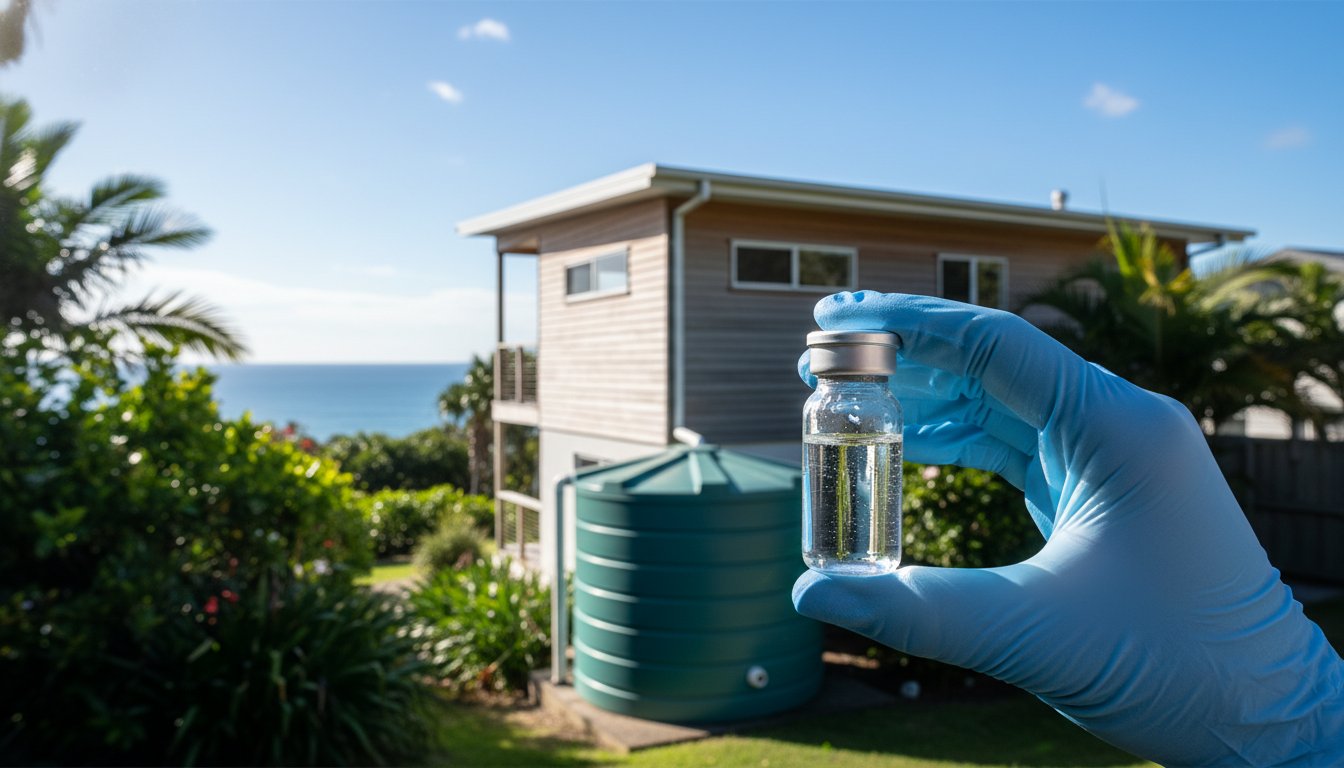
Rainwater Tank Testing Sunshine Coast: The 2026 Health Check Guide
If your tank water looks crystal clear, does that actually mean it's safe for your family to drink? Many homeowners assume a visual check is enough, but microscopic pathogens and chemical runoff don't always change the colour or taste of your supply. This is why professional rainwater tank testing sunshine coast has become the local standard for families who want to move beyond guesswork, especially after the heavy rainfall events recorded across Noosaville and the hinterland over the last twelve months.
We understand the uncertainty that follows a storm or a long dry spell. You need to know your water meets Australian Drinking Water Guidelines without getting lost in a sea of technical jargon or confusing lab data. We promise to show you how laboratory analysis identifies hidden risks like E. coli and heavy metals that standard filters often miss, giving you total confidence in every glass you pour.
This guide previews the essential 2026 health check steps and explains how to get a clear report with practical advice you can actually use. We'll help you navigate the testing process so you can focus on your family's wellbeing instead of worrying about what might be lurking in your tank.
Key Takeaways
- Understand why clear-looking water can still harbour dangerous pathogens and why visual checks are never enough to guarantee family safety.
- Learn why professional rainwater tank testing sunshine coast provides the scientific accuracy and reliability that basic "dip-and-read" home kits often lack.
- Identify the most common microbiological and chemical contaminants found in regional Queensland tanks and the specific ways they enter your supply.
- Establish a best-practice maintenance schedule and recognise the urgent "trigger events" that require an immediate water quality health check.
- Discover how to move beyond confusing data with reports that offer "More Than Just Numbers on a Page" and provide clear, practical advice for your household.
Why Rainwater Tank Testing is Essential for Sunshine Coast Properties
Living on a regional property in the Sunshine Coast Hinterland or Noosaville often means you're the manager of your own utility. Unlike town water, your tank isn't monitored by a council team every hour. By 2026, shifting weather patterns and increased wildlife activity mean a proactive approach is the only way to ensure safety. Rainwater harvesting systems are efficient, but they're also open to the environment. Roof debris, bird droppings, and decaying organic matter from overhanging trees can turn a clean tank into a breeding ground for bacteria in just 48 hours. Professional rainwater tank testing sunshine coast residents trust provides more than just data; it gives you the practical steps to fix issues before they become health risks.
The transition to 2026 standards reflects a growing need for precision. It's no longer enough to assume the water is fine because it hasn't caused a problem yet. Contamination from local wildlife, including possums and bats, introduces pathogens that can survive in tank sediment for months. Regular testing identifies these risks early, allowing for simple maintenance rather than expensive system overhauls. We focus on providing local testing and clear results that actually make sense for your specific property layout.
The "Clear Water" Fallacy
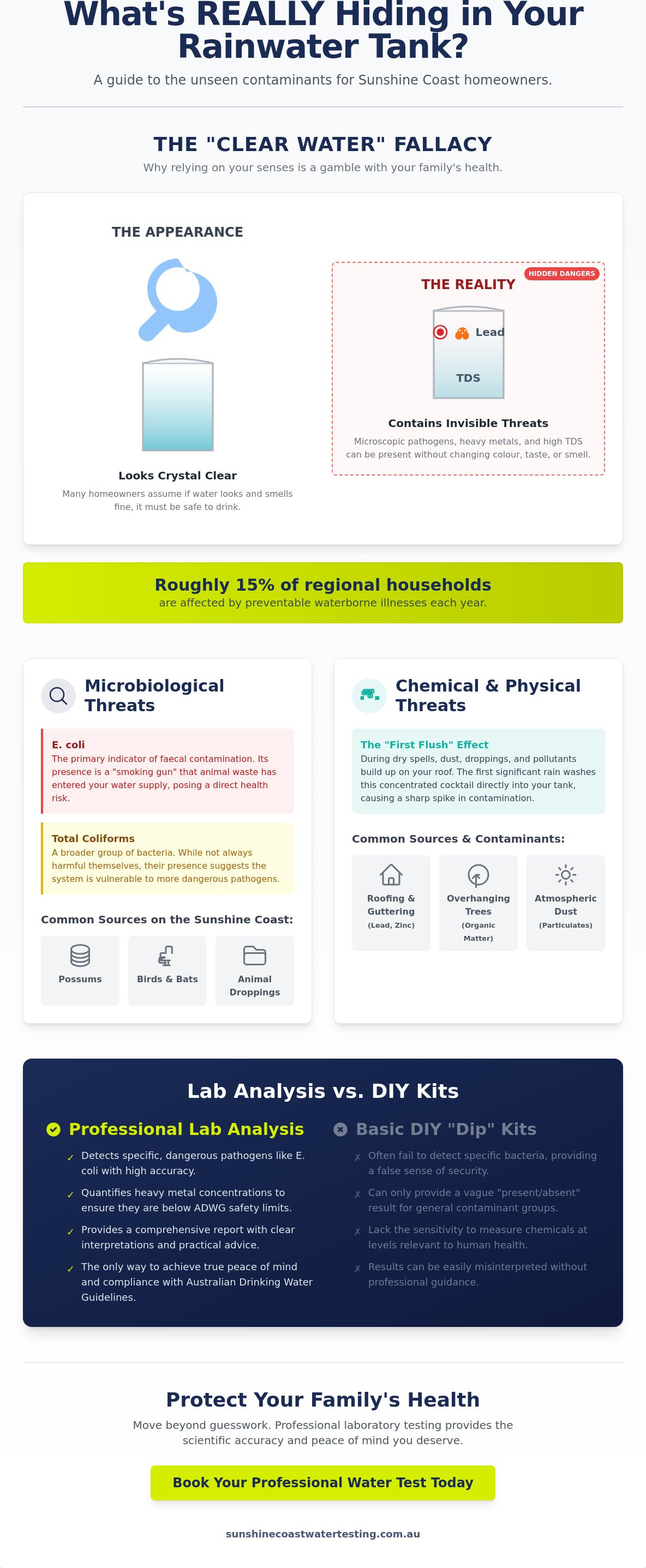
Does your water look like it came from a bottle? That doesn't mean it's safe to drink. High-clarity water often hides microscopic pathogens like E. coli or Giardia. These organisms are invisible to the naked eye. Total Dissolved Solids (TDS) can also be high even if the water looks sparkling. You can't smell lead or taste heavy metals until they've already reached dangerous concentrations. Relying on your senses is a gamble that roughly 15% of regional households lose every year due to preventable waterborne illnesses. Clear water is an aesthetic goal, but biological safety is a clinical one.
While clinical safety is the priority, many families are also looking at how water properties like alkalinity contribute to overall health, with pH 9 Wasser offering a wealth of information on the benefits of ionised basic water.
Regulatory Standards in Australia
The Australian Drinking Water Guidelines (ADWG) set the gold standard for what constitutes safe water. While these rules strictly govern municipal supplies, they also provide the benchmark for private tanks. For acreage owners, a yearly "Health Check" is a necessity to meet these national safety thresholds. We specialise in water testing sunshine coast wide, ensuring your private supply meets the same rigorous standards as the big city networks. Our reports don't just list numbers on a page; they explain what those numbers mean for your family's health and what to do next.
What’s Hiding in Your Tank? Microbiological and Chemical Contaminants
Ever wondered why your tank water tastes slightly metallic after a heavy storm? It isn't just your imagination. Most Australian tank systems are open to the environment, which makes them vulnerable to a range of invisible visitors. Pathogens enter your water through a simple mechanical process: transport. Rain washes accumulated debris, dust, and organic matter from your roof catchments directly into the storage vessel. Once inside, these contaminants can either settle into the sludge at the bottom or remain suspended in the water you drink.
Seasonal weather patterns on the Sunshine Coast dictate the concentration of these risks. During a drought, contaminants like dried animal droppings and industrial dust concentrate on the roof surface. When the first big rain hits, this "first flush" carries a high-load cocktail of pollutants into the tank. During a deluge, the sheer volume of water can stir up years of sediment from the tank floor, re-suspending old bacteria into the water column. Professional rainwater tank testing sunshine coast homeowners use helps distinguish between acute risks, like a sudden bacterial spike, and long-term chemical exposure that builds up over years.
Microbiological Threats: E. coli and Coliforms
E. coli is the primary indicator of faecal contamination in Australian water supplies. If a laboratory detects E. coli, it's a "smoking gun" that animal waste has entered the system. On the Sunshine Coast, local wildlife like possums, scrub turkeys, and fruit bats are the most common sources of these pathogens. While E. coli represents a direct health risk, "Total Coliforms" provide a broader picture of your tank's general integrity. High coliform counts suggest that your system's seals, vents, or filters are failing, allowing environmental bacteria to thrive in your drinking supply.
Chemical and Heavy Metal Risks
Heavy metals don't just appear; they are often leached from the very materials used to collect the water. Many older homes in the region still have lead flashings, copper pipes, or galvanised iron roofs. Rainwater is naturally slightly acidic, often sitting at a pH of around 5.5 to 6.5. This acidity makes the water "hungry" and aggressive toward metal surfaces. Heavy metal leaching is the process where acidic water dissolves toxic elements from metal surfaces. Over time, this leads to elevated levels of lead or copper, which can cause long-term health issues if left unmanaged. If you haven't checked your water chemistry lately, it's a good idea to book a water test to ensure your pH levels aren't corroding your plumbing from the inside out.
Lab Analysis vs. DIY Kits: Choosing the Right Rainwater Test
Is a A$20 hardware store kit sufficient for your family's safety? While "dip-and-read" strips offer a quick snapshot, they often provide a false sense of security. These kits are designed for broad ranges rather than the precise detection required for safe drinking water. When you're investing in rainwater tank testing sunshine coast, you need to know exactly what's in your glass, not just a vague colour match on a plastic strip. The difference between a "near enough" result and a laboratory-grade analysis can be the difference between a healthy home and a persistent family illness.
The Pitfalls of DIY Testing
Home test kits suffer from a high margin of error, sometimes reaching 25% depending on the storage conditions of the chemical reagents. These consumer-grade products frequently miss low-level but dangerous bacterial colonies that haven't yet reached a massive concentration. A DIY kit won't tell you if your tank has a trace lead concentration of 0.015 mg/L, which exceeds Australian Drinking Water Guidelines. You don't get a plan of action with a home kit. You're left with a colour chart and a lot of guesswork, lacking the expert interpretation needed to understand how your local environment affects your water quality.
The Value of Professional Laboratory Analysis
Professional testing relies on NATA-accredited processes to ensure every decimal point is accurate. This isn't just about high-end equipment; it's about a controlled environment where samples aren't contaminated by outside variables. Our Professional Water Analysis Sunshine Coast provides more than just raw data. We translate complex chemistry into practical advice you can actually use to improve your water system.
Choosing a lab test means you receive:
- Trace Metal Detection: Identification of heavy metals like copper, lead, and cadmium at levels invisible to home kits.
- Microbiological Precision: Accurate counts of E. coli and total coliforms using professional incubation methods.
- Chemical Clarity: Detailed readings on pH, turbidity, and hardness that affect your plumbing and appliances.
- Practical Guidance: A clear explanation of what the numbers mean for your specific filtration setup.
The true price of an inaccurate result is the health of your household. Spending a little more on professional rainwater tank testing sunshine coast ensures you aren't ignoring a hidden problem. We deliver clear results that actually make sense, giving you the confidence to turn on the tap without hesitation. It's about more than just numbers on a page; it's about the peace of mind that comes from local expertise.
Best Practice Maintenance: When to Organise Your Next Tank Test
When was the last time you actually looked inside your tank? For many property owners, the water system is out of sight and out of mind. However, maintaining a safe supply requires more than just a sturdy lid. Routine rainwater tank testing sunshine coast residents rely on ensures that invisible contaminants like heavy metals or harmful bacteria don't compromise your household health. It's about moving from guesswork to certainty.
The Annual Health Check Schedule
We recommend a professional laboratory assessment at least once every 12 months. This annual baseline is essential for permanent residents in areas like Noosaville or the Hinterland. If you manage a holiday home, this schedule is even more critical. Stagnant water in pipes can lead to bacterial spikes while the property sits empty between guests. The most effective time to test is right after the first major rains of the season, typically around October or November. This "first flush" often carries the highest concentration of roof debris and pollutants into your storage. Keep a dedicated folder for your results; tracking your water quality over time helps you spot shifting pH levels or rising sediment before they damage your appliances.
Signs You Need an Urgent Test
Sometimes your system sends out warning signals that require immediate attention. If your water develops a "rotten egg" smell, it's usually a sign of hydrogen sulphide gas caused by decaying organic matter at the bottom of the tank. Change in colour is another red flag. Water that looks tea-coloured or leaves blue-green stains on your porcelain suggests high tannin levels or pipe corrosion. You should also book an urgent water test after any of these trigger events:
- Severe weather events, such as 100mm downpours that cause rapid runoff.
- Finding local wildlife, like a dead frog or bird, in the filter basket.
- Nearby bushfires where ash and fire retardants may have settled on your catchment area.
- A noticeable change in the taste or "mouthfeel" of your drinking water.
Maintaining Catchment-to-Tap Integrity
To get an accurate picture of your water safety, the sampling process must be precise. Always use a sterile container provided by the lab. Don't touch the inside of the cap or the rim of the bottle, as skin bacteria will immediately contaminate the sample and skew your results. We suggest collecting water from the kitchen tap rather than the tank itself. This checks the entire "catchment-to-tap" path, including your pump, filters, and internal plumbing. Our goal is to provide "More Than Just Numbers on a Page" by giving you a clear understanding of what's happening in your pipes. Local Testing. Clear Results. Practical Advice.
Professional Rainwater Analysis: The Sunshine Coast Water Testing Approach
We believe that local families deserve more than just a data sheet. Our approach to rainwater tank testing sunshine coast is built on a simple foundation: Local Testing, Clear Results, and Practical Advice. We understand that your primary concern isn't the chemical formula of a contaminant; it's whether your kids can safely drink the water or if your appliances are at risk of corrosion. We provide the bridge between complex laboratory science and the everyday reality of managing a rural or semi-rural property.
Our "More Than Just Numbers" philosophy means we translate raw data into actionable steps. If a sample shows elevated bacteria or mineral levels, we don't just leave you with a high reading. We explain what those figures mean for your household health and your tank's infrastructure. This commitment to clarity ensures you feel confident in your water supply without needing a degree in chemistry to understand why.
Unbiased Results You Can Trust
Integrity is the core of our business model. We don't sell filters, we don't offer tank cleaning services, and we don't install UV systems. This is a deliberate choice to ensure our results remain 100% objective. Many companies in the water industry offer "free" testing as a lead generation tool to sell expensive A$2,500 filtration units. We operate differently. By focusing strictly on analysis, we remove any conflict of interest.
We use an independent laboratory to process every sample, providing a level of accuracy that home DIY kits simply cannot match. This scientific rigour is essential for identifying invisible threats. For a deeper look at specific contaminants we monitor, visit our Heavy Metals Testing pillar. You get the truth about your water, backed by professional standards, with no high-pressure sales tactics involved.
Easy-to-Understand Reporting
Our reports are designed for busy property owners. We use a clear, colour-coded system to highlight areas of concern immediately. Green indicates your levels are within the Australian Drinking Water Guidelines; amber suggests a need for monitoring or minor maintenance; red signals an urgent issue that requires attention. We use plain English to describe every finding, so you know exactly what is happening in your tank.
We help you decide on the best course of action based on your specific data. Whether it's a simple recommendation to diverter maintenance or a suggestion to check your roof flashings, our advice is always grounded in your results. This tailored approach has made us the standard for rainwater tank testing sunshine coast residents trust for their annual health checks. Don't leave your water quality to guesswork or biased sales pitches. Get your rainwater tank health check today and secure peace of mind for your home.
- Step 1: Order your professional sample kit online.
- Step 2: Collect your water sample following our easy instructions.
- Step 3: Drop it off at our Noosaville centre or use our express return service.
- Step 4: Receive your clear, colour-coded report within 5 business days.
Secure Your Family’s Water Quality Today
Your rainwater tank is a vital asset for your home, but it shouldn't be a mystery. Moving beyond basic visual checks to professional rainwater tank testing sunshine coast ensures that invisible microbiological and chemical contaminants are identified before they become a health risk. Since 2026, we've helped local residents understand exactly what's in their water supply by providing reports that offer more than just numbers on a page. You get clear, practical advice on what to do next without any confusing technical jargon.
Our fast laboratory turnaround means you won't be left waiting for weeks to know if your drinking water is safe for your family. Don't rely on guesswork or basic DIY kits that often miss subtle chemical imbalances or specific bacterial strains. Instead, choose a partner that understands the unique environmental factors affecting properties across the coast. It’s about total peace of mind and ensuring your maintenance schedule is backed by scientific accuracy. We’re here to help you keep your water clean and your household healthy.
Book Your Rainwater Tank Health Check
Frequently Asked Questions
Is it safe to drink rainwater without testing it first?
It isn't safe to assume your rainwater is potable without a proper laboratory analysis. Roof catchments often collect bird droppings, frog waste, and environmental pollutants that you can't see with the naked eye. Queensland Health guidelines recommend regular testing to ensure your supply meets the Australian Drinking Water Guidelines. Testing provides the only definitive proof that your water is free from harmful pathogens and safe for your family.
How often should I test my rainwater tank for E. coli?
You should test for E. coli at least once every 12 months to maintain a healthy system. It's also vital to conduct rainwater tank testing sunshine coast after heavy rainfall events or prolonged dry spells when debris builds up on your roof. Local health authorities suggest this frequency to catch bacterial spikes before they cause illness. Regular checks give you peace of mind that your filtration system is actually doing its job.
What are the signs that my rainwater tank might be contaminated?
Look for discolouration, unusual smells, or a metallic taste in your water supply. If your water looks tea-coloured, it often indicates high organic matter or tannin leaching from leaf litter in your gutters. A rotten egg smell usually points to anaerobic bacteria growing in the sludge at the bottom of your tank. If even 5% of your household experiences unexplained stomach upsets, it's time to check the tank immediately.
Can I test my own tank water with a home kit?
Home kits provide a basic snapshot but they lack the precision of NATA-accredited laboratory equipment. Most DIY strips only check for pH or high levels of chlorine and frequently miss specific pathogens like Cryptosporidium or Giardia. For results that actually make sense, a professional analysis is necessary. Our goal is to provide more than just numbers on a page; we give you a clear picture of your water's safety.
Does boiling rainwater make it safe to drink if it contains heavy metals?
Boiling water kills bacteria and viruses but it won't remove heavy metals like lead or copper. In fact, boiling can increase the concentration of these metals as the water evaporates. If your roof has old lead flashing or galvanised gutters, you need specific filtration or tank treatments rather than heat. Always rely on local testing, clear results, and practical advice to handle chemical contaminants effectively.
How much does a professional rainwater tank test cost on the Sunshine Coast?
Professional water testing costs vary based on the complexity of the analysis you require. Basic microbiological tests generally start around A$80 to A$160 at regional labs, while comprehensive chemical screens can exceed A$350. These prices reflect the 2024 market rates for accredited laboratory services in Queensland. Investing in a professional report ensures you aren't guessing about your family's long-term health and safety.
What should I do if my water test results show high levels of bacteria?
You must shock-dose your tank with food-grade chlorine or install a UV sterilisation system immediately. It's also important to inspect your roof and gutters for overhanging branches or animal carcasses that might be fueling the growth. Once you've treated the water, wait 48 hours and perform a follow-up rainwater tank testing sunshine coast to confirm the bacteria is gone. This structured approach ensures your water returns to a safe standard.
Will a standard water filter remove all contaminants from my tank water?
Standard sediment filters only remove dirt and large particles; they don't kill bacteria or remove dissolved chemicals. You need a 0.1-micron filter or a UV system to neutralise pathogens like E. coli and ensure your water is safe. Carbon filters are effective for improving taste and removing some chemicals, but they won't stop all heavy metals. We help you understand which system fits your specific needs so your reports show more than just numbers on a page.

Article by
Stephen McDougall
Stephen McDougall is the owner of Pristine Water Systems Sunshine Coast and Sunshine Coast Water Testing, specialising in water quality, filtration, and tank systems. He is known for delivering clear, easy-to-understand advice and practical solutions to help clients maintain safe, reliable water.
Disclaimer
The information provided in this article is for general guidance only and is not a substitute for professional water testing or site-specific advice. Water quality can vary between properties. For accurate results and recommendations, we recommend professional testing and assessment.