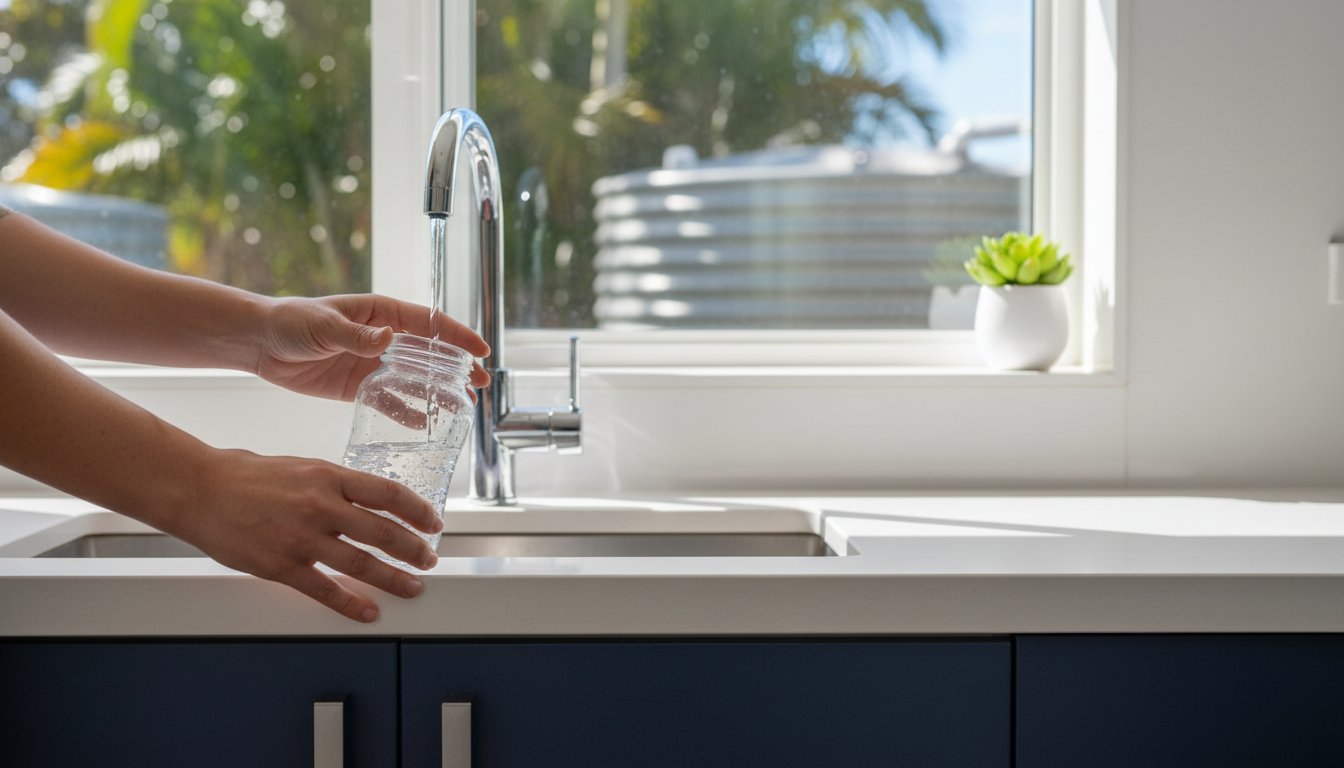
Safe Water for Baby Formula in Australia: A Comprehensive Guide for Parents
What if boiling your kettle is only solving half the safety puzzle for your newborn? Most parents across the Sunshine Coast and Noosa naturally feel a bit of anxiety about what might be hiding in their tank or bore water, especially when online forums contradict what health professionals say. Finding safe water for baby formula australia shouldn't feel like a guessing game when your child's health is the priority. We understand that you want certainty, not just another "she'll be right" approach to your household supply.
In this guide, you'll learn how to ensure your water meets the Australian Drinking Water Guidelines (ADWG) for infant formula preparation. We'll clarify the confusion between filtering and boiling, explain the impact of hidden minerals in areas like Cooroy and Pomona, and provide a clear path to fix any issues. At Sunshine Coast Water Testing, we believe that testing identifies the problem; the solution comes next. If your results show your water does not meet Australian Drinking Water Guidelines and should be addressed, we'll show you how Pristine Water Systems Sunshine Coast can help with targeted filtration, tank cleaning, or UV purification. It's time to trade that worry for genuine peace of mind.
Key Takeaways
- Understand why boiling water only addresses biological risks and why chemical screening is vital for protecting infants from nitrates and heavy metals.
- Discover the essential steps to ensure safe water for baby formula australia by comparing your home supply against the Australian Drinking Water Guidelines.
- Learn how to identify specific risks in tank and bore water systems common in areas like Noosa, Doonan, and Pomona.
- See why professional water testing identifies the problem first, allowing for targeted fixes from Pristine Water Systems Sunshine Coast.
- Gain peace of mind with a plain-English summary from Sunshine Coast Water Testing that translates complex lab data into practical advice for your household.
Understanding Safe Water for Baby Formula in Australia
Preparing a bottle for your little one is a daily ritual that should be filled with care, not doubt. For parents across the Sunshine Coast and Noosa, ensuring you have safe water for baby formula australia is the foundation of infant health. Water isn't just a mixer; it makes up the vast majority of what your baby consumes in their first few months. Because infants have smaller bodies and developing organs, they are far more sensitive to mineral imbalances and chemical traces than adults are.
When you mix infant formula, you're creating a complete nutritional source. However, if the water used contains high levels of certain minerals or chemicals, it can alter the nutritional balance or put unnecessary strain on a baby's kidneys. This is why the distinction between 'potable' water, which is generally drinkable for adults, and water that meets the highest safety standards is so important for growing families. A baby's system simply hasn't built the same defences as yours.
What the Australian Drinking Water Guidelines Say
The Australian Drinking Water Guidelines (ADWG) serve as our national roadmap for water quality. These guidelines provide the benchmarks for every household, whether you're in the heart of Maroochydore or a leafy block in Cooroy. Recent updates in June 2025 introduced stricter limits on substances like PFAS and lead, reflecting a growing focus on protecting vulnerable populations. As of May 2026, the NHMRC is also conducting public consultations on proposed updates for ammonia and nickel levels.
It's vital to remember that clear water is often a mask. Just because your tap water looks, smells, and tastes fine doesn't mean it meets these rigorous national standards. Testing is the only way to see the actual chemical and microbiological makeup of your supply. If your water does not meet Australian Drinking Water Guidelines and should be addressed, you need a clear plan to fix it.
Why Your Water Source Matters
Whether you rely on town water or a private supply in Doonan or Tinbeerwah, the source changes the risk profile. Many families believe rainwater is naturally pure, but roof runoff can collect everything from bird droppings to heavy metals leached from old plumbing. Bore water presents its own challenges, often carrying high mineral loads or salt levels that aren't ideal for a baby's diet. These hidden factors are why a standard drinking water test is a sensible first step for new parents.
At Sunshine Coast Water Testing, we believe that water testing identifies the problem; the solution comes next. We provide plain-English summaries so you don't have to be a scientist to understand your home's water. If an issue is found, Pristine Water Systems Sunshine Coast can provide the necessary filtration or tank cleaning to ensure your water is ready for your baby's needs.
Hidden Contaminants: What Boiling Won't Remove
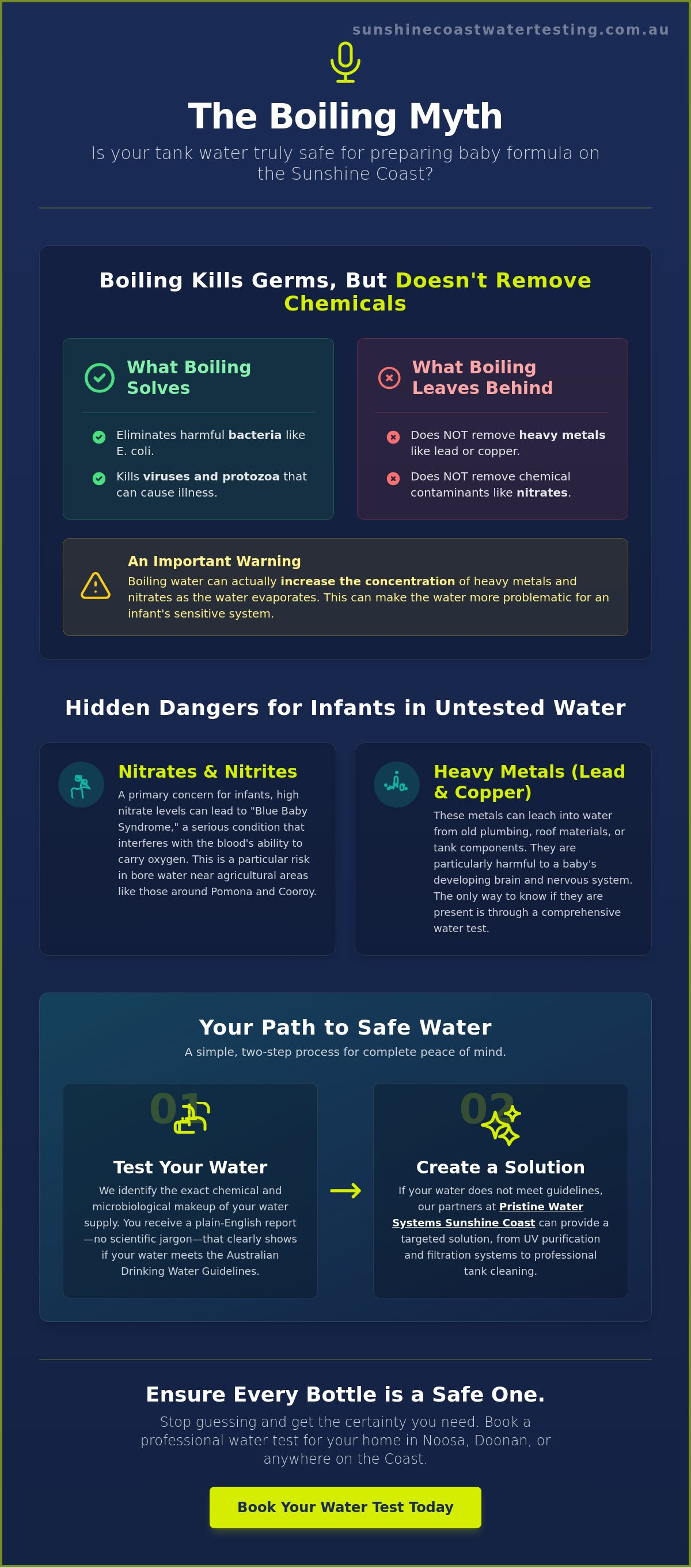
Is boiling your water enough to protect your baby? While Australian health authorities recommend boiling and cooling tap water for infants under 12 months to eliminate biological risks, this process only addresses one part of the safety equation. Boiling is highly effective at killing bacteria and viruses, but it doesn't remove chemical contaminants. In some cases, boiling for too long can actually be counterproductive. As water evaporates during the boil, the concentration of minerals and heavy metals left behind can actually increase.
For parents aiming for safe water for baby formula australia, understanding this "boiling myth" is essential. If your water contains elevated levels of lead, copper, or nitrates, heat won't make them disappear. Instead, you might be serving a more concentrated dose of these substances to your newborn. This is particularly concerning for those using older plumbing systems or private water sources in regional areas like Pomona and Cooroy.
Chemical Risks in Rural and Regional Water
In rural communities, agricultural runoff is a common way for nitrates and nitrites to enter bore and tank water supplies. High nitrate levels are a specific concern for infants because they can lead to methemoglobinemia, often called "Blue Baby Syndrome," which affects the blood's ability to carry oxygen. Unlike town water, which is monitored for these levels, private supplies in places like Tinbeerwah or Doonan require individual vigilance.
Heavy metals like lead and copper are another hidden concern. These often leach from old brass fittings or lead-soldered joints in household plumbing. Because babies absorb lead more readily than adults, even small amounts can be a concern for their development. If you're worried about what might be leaching into your supply, you can book a targeted heavy metals test to get the facts.
Microbiological Hazards Beyond E. Coli
While E. coli is the most famous waterborne bug, tank and bore water can host more resilient pathogens like Giardia and Cryptosporidium. These organisms can sometimes survive standard boiling if the water isn't held at a rolling boil for long enough. They often enter tanks through animal droppings or sediment build-up at the bottom of the system. A professional microbiological analysis provides a definitive safety profile that boiling alone cannot guarantee.
Sunshine Coast Water Testing identifies these issues through detailed lab work, providing a plain-English summary that explains exactly what is in your water. If your results show the supply does not meet Australian Drinking Water Guidelines and should be addressed, Pristine Water Systems Sunshine Coast offers practical solutions like UV sterilisation or advanced filtration to fix the issue once and for all.
Comparing Water Sources: Tap, Tank, and Bore Water
The journey your water takes before it reaches the kettle significantly impacts its profile. While most Australian families rely on mains water, many households in areas like Cooroy, Doonan, and Tinbeerwah use private systems. Each source presents a different set of considerations for parents preparing safe water for baby formula australia. Understanding these differences helps you move from guesswork to certainty.
- Mains Water: Generally treated to meet national standards, but quality can fluctuate due to seasonal changes or the condition of your home's internal pipes.
- Tank Water: Relies on roof catchment, making it susceptible to environmental debris and local wildlife activity.
- Bore Water: Drawn from underground aquifers, often carrying high mineral loads or traces of agricultural chemicals from nearby properties.
Because every property is unique, a Standard Water Test is the only way to verify that your specific supply meets the requirements for infant health. Testing identifies the problem; the solution comes next.
Is My Tank Water Safe for My Baby?
Rainwater is often perceived as the "purest" option, but the reality of a harvesting system is more complex. Dust from regional roads, bird droppings, and decaying leaf matter can all accumulate in your gutters and wash into your tank. Over time, this creates a layer of sediment at the bottom that can harbour bacteria. A visual check of your tank is never sufficient. Water that looks crystal clear can still contain microscopic hazards that do not meet Australian Drinking Water Guidelines and should be addressed.
Regular maintenance is key for tank systems. If a test from Sunshine Coast Water Testing reveals high bacterial counts or turbidity, Pristine Water Systems Sunshine Coast can provide professional tank cleaning and UV sterilisation to restore your system's health.
Bore Water and Infants: A Cautionary Note
Groundwater is highly variable. In many parts of the Sunshine Coast hinterland, bore water can be "hard," meaning it contains high levels of calcium and magnesium. While these minerals are common, excessive levels can be difficult for a baby's developing kidneys to process when mixed with formula. There is also the invisible risk of chemical seepage from local farming or industry.
Bore water should never be used for infant formula without a comprehensive lab analysis. This identifies not just the minerals you can taste, like salt, but also the ones you can't see. Once you have your plain-English summary of results, you can make an informed decision about whether your bore water is suitable or if a filtration solution is required.
Practical Steps to Ensure Safe Formula Preparation
Most guides start at the kitchen bench, but safe water for baby formula australia begins at the source. Whether your water comes from a town supply or a tank in Pomona, the first step is knowing exactly what's in it. Australian health authorities recommend a specific process for preparation to manage biological risks. You should always use fresh cold water from the tap, bring it to a rolling boil, and then let it cool for no more than 30 minutes. This ensures the water is still hot enough (at least 70°C) to kill any potential bacteria in the formula powder itself before you cool the bottle further for feeding.
While this process handles biological risks, it doesn't solve chemical or mineral issues. This is where a proactive maintenance routine for your home's water system becomes vital. You should regularly check your pumps for leaks, inspect your tank's first-flush diverters, and ensure your filters are replaced according to the manufacturer's schedule. Neglecting these physical components can lead to a steady decline in water quality, even if the source was originally clean.
The 'Test then Treat' Philosophy
Many homeowners make the mistake of installing expensive filtration systems without a clear understanding of what they actually need to remove. This "guess and check" approach often leads to wasted money on filters that don't address the specific minerals or chemicals present in your supply. A professional water analysis is the only way to avoid this trap. By identifying the exact profile of your water, you can choose a solution that actually works for your specific situation.
It's much cheaper to test your water once a year than to replace a whole-house filter that wasn't necessary. Water testing identifies the problem; the solution comes next. If you are using tank or bore water in areas like Cooroy or Noosa, regular checks on your pump's pressure and the sediment levels in your tank are just as important as the water quality itself.
Working with Professionals for Peace of Mind
At Sunshine Coast Water Testing, we don't just hand you a page of confusing numbers. We provide a plain-English summary that explains if your supply meets the Australian Drinking Water Guidelines. This allows you to make informed decisions for your family without needing a degree in chemistry. We focus on clarity so you can feel certain about every bottle you prepare.
If your results show your water does not meet Australian Drinking Water Guidelines and should be addressed, you don't have to figure it out alone. We work alongside Pristine Water Systems Sunshine Coast to ensure that once a problem is found, it's fixed properly. They specialise in practical solutions like tank cleaning, UV sterilisation, and high-quality filtration systems tailored to the unique conditions of the Sunshine Coast hinterland. Ready to get the facts about your home's supply? You can book a professional water test today to ensure your water is ready for your baby.
Your Safe Water Action Plan for 2026
Ensuring you have safe water for baby formula australia is not a one-time task; it's an ongoing commitment to your family's health. As we move through 2026, the focus on water quality in regional areas like Noosa, Cooroy, and Doonan has never been higher. To move from uncertainty to total peace of mind, you need a clear, logical path. Following a structured action plan ensures you aren't just guessing about the quality of the water entering your baby's bottle.
- Step 1: Verify Compliance. Conduct a professional lab test to see how your water compares against the latest Australian Drinking Water Guidelines.
- Step 2: Understand the Data. Review your results with a plain-English summary from Sunshine Coast Water Testing so you know exactly what the numbers mean for your household.
- Step 3: Fix the Issue. If your water does not meet Australian Drinking Water Guidelines and should be addressed, implement targeted filtration or system cleaning.
- Step 4: Stay Proactive. Establish a recurring maintenance and testing schedule to account for seasonal changes and system wear.
By following these steps, you ensure that any solution you invest in is actually necessary. Remember, water testing identifies the problem; the solution comes next.
When to Book Your Water Test
The ideal time to check your water quality is before your baby arrives. This gives you plenty of time to address any issues without the pressure of a newborn's feeding schedule. If you've recently moved into a new property in Pomona or Tinbeerwah, a water test should be at the top of your "to-do" list. For those on tank or bore systems, annual testing is the gold standard. Environmental factors, such as the decline in national water storage seen in 2025, can change the mineral and contaminant profile of your supply over time. You can book a water test today to get the immediate clarity you need.
Choosing the Right Remediation
If a test reveals that your water needs attention, the next step is choosing the right fix. Carbon filters are excellent for removing taste and odour, while reverse osmosis or UV sterilisation might be required for more complex mineral or biological issues. This is where professional help is invaluable. We recommend using Pristine Water Systems Sunshine Coast for practical remediation like tank cleaning or the installation of purification systems.
The combination of professional testing and expert cleaning ensures your child gets the best possible start. Safety is a continuous process of verification, not a one-off chore. By staying diligent with your testing and maintenance, you can feel confident that the water you use for formula is consistent, reliable, and compliant with national standards.
Give Your Baby the Best Start with Verified Water Quality
Ensuring you have safe water for baby formula australia is about moving beyond guesswork and relying on scientific facts. We've explored how boiling is a vital step for killing bacteria, but it doesn't address the hidden chemical risks or high mineral loads often found in tank and bore water. By benchmarking your home's supply against the Australian Drinking Water Guidelines, you can be certain that every bottle you prepare is as healthy as possible for your newborn's developing system.
At Sunshine Coast Water Testing, we specialise in providing detailed plain-English summaries that are trusted by Australian homeowners for their scientific accuracy. We believe that water testing identifies the problem; the solution comes next. If your results show your water does not meet Australian Drinking Water Guidelines and should be addressed, Pristine Water Systems Sunshine Coast can help you implement the right filtration or cleaning solution for your property.
Secure your family's peace of mind with a professional water test today and take the first step toward a healthier home. You're doing a great job for your little one, and we're here to help you get the water right.
Frequently Asked Questions
Is Australian tap water safe for baby formula without boiling?
Health authorities across Australia recommend that all water used for infants under 12 months be boiled and then cooled. While town water is generally treated to high standards, the condition of your home's pipes can still impact quality. Boiling ensures that any potential bacteria are eliminated before the water is mixed with formula. Following this simple step is a foundation for ensuring safe water for baby formula australia in every household.
Can I use bottled water for baby formula in Australia?
You can use bottled water for formula, but it must still be boiled and cooled just like tap water. Always check the mineral content on the label before use. Some brands have high levels of sodium or sulphate that may not be ideal for a baby's developing kidneys. If you're unsure about your primary water source, a professional test is often a more reliable and cost-effective long-term solution for families.
How do I know if my tank water does not meet Australian Drinking Water Guidelines?
You cannot determine water quality by sight, smell, or taste alone. Many hidden contaminants, such as heavy metals or nitrates, are completely invisible to the naked eye. The only certain way to know if your supply meets national standards is through a professional lab analysis. Sunshine Coast Water Testing provides a plain-English summary of your results, helping you understand if your tank water does not meet Australian Drinking Water Guidelines and should be addressed.
Does boiling water remove lead or nitrates?
No, boiling does not remove chemical contaminants like lead or nitrates. Because these substances don't evaporate, boiling for an extended period actually increases their concentration as the water volume decreases. If your home's water contains these chemicals, it does not meet Australian Drinking Water Guidelines and should be addressed. Identifying these hidden risks through testing is the only way to ensure your water is truly suitable for your baby.
Is a home water filter enough to make bore water safe for my baby?
A basic home filter jug is rarely enough to manage the complex mineral and chemical profile of bore water. Groundwater in areas like Doonan or Tinbeerwah can vary significantly in salt and mineral hardness. It's essential to test your bore water first to understand its unique makeup. Once the specific issues are identified, Pristine Water Systems Sunshine Coast can recommend a targeted filtration or purification system to fix the problem properly.
How often should I have my home water supply professionally tested?
We recommend having your water supply tested at least once a year if you rely on a tank or bore system. Properties in regional areas like Cooroy or Pomona are often affected by seasonal changes, which can alter the water's chemical and microbiological profile. Regular testing ensures that your filtration systems are working correctly and that your water continues to meet the safety standards required for safe water for baby formula australia.
What should I do if my water test results show high bacteria levels?
If your test results show high bacteria levels, the first step is to identify the source of the contamination. You should switch to an alternative water source for formula until the issue is resolved. You can then reach out to Pristine Water Systems Sunshine Coast to discuss solutions like professional tank cleaning or UV purification. Remember, testing identifies the issue, while professional remediation provides the long-term solution for your home.
Can I use a 'hydroboil' or hot water urn for formula?
It is best to avoid using 'hydroboils' or hot water urns for preparing infant formula. These systems often hold water for long periods, which can lead to a higher concentration of minerals due to constant heating and evaporation. For the best results, use fresh water from the cold tap and bring it to a rolling boil in a clean kettle. This ensures the water is fresh and the mineral balance remains stable.

Article by
Stephen McDougall
Stephen McDougall is the owner of Pristine Water Systems Sunshine Coast and Sunshine Coast Water Testing, specialising in water quality, filtration, and tank systems. He is known for delivering clear, easy-to-understand advice and practical solutions to help clients maintain safe, reliable water.
Disclaimer
The information provided in this article is for general guidance only and is not a substitute for professional water testing or site-specific advice. Water quality can vary between properties. For accurate results and recommendations, we recommend professional testing and assessment.