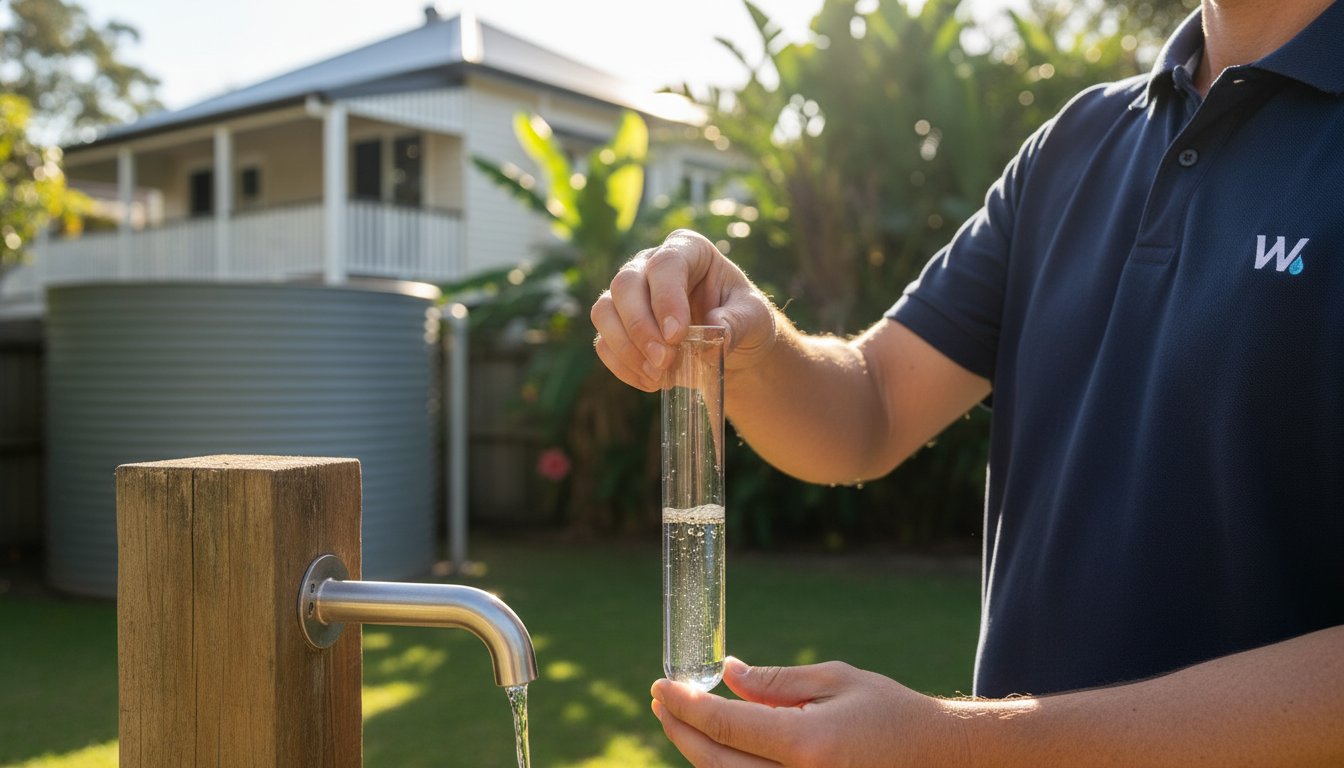
Testing for Agricultural Runoff in Bore Water: A Homeowner’s Guide
Have you ever wondered what exactly washes into the ground when the paddocks next door are sprayed or fertilised? For many families in Cooroy, Doonan, and across the Sunshine Coast, bore water is a vital lifeline, yet it's natural to feel a sense of uncertainty when you notice a slight change in smell or colour after heavy rain. Professional testing for agricultural runoff in bore water is the only way to move past that guesswork and ensure your household supply meets the Australian Drinking Water Guidelines (ADWG).
In this guide, you'll learn how to identify common contaminants like nitrates or pesticides and manage your water quality with confidence. We'll explain which specific tests matter most for rural properties and how to interpret the data without needing a science degree. At Sunshine Coast Water Testing, we believe that testing identifies the problem, and the solution comes next. If your results show that your water does not meet Australian Drinking Water Guidelines and should be addressed, we'll show you how a local expert like Pristine Water Systems Sunshine Coast can help with targeted filtration or UV purification to get your supply back on track.
Key Takeaways
- Understand how fertilisers and pesticides leach into the water table and why heavy rain in areas like Pomona or Tinbeerwah can impact your bore.
- Learn to spot warning signs like unusual foaming or chemical smells that suggest you need professional testing for agricultural runoff in bore water.
- Discover the simple steps to purge your system and collect a clean sample that provides an accurate picture of your groundwater health.
- Find out how to interpret lab results using the Australian Drinking Water Guidelines (ADWG) to determine if your supply meets national standards.
- Follow a clear path from identification to resolution, using testing to pinpoint issues that Pristine Water Systems Sunshine Coast can then fix with targeted treatment.
Understanding Agricultural Runoff in Australian Bore Water
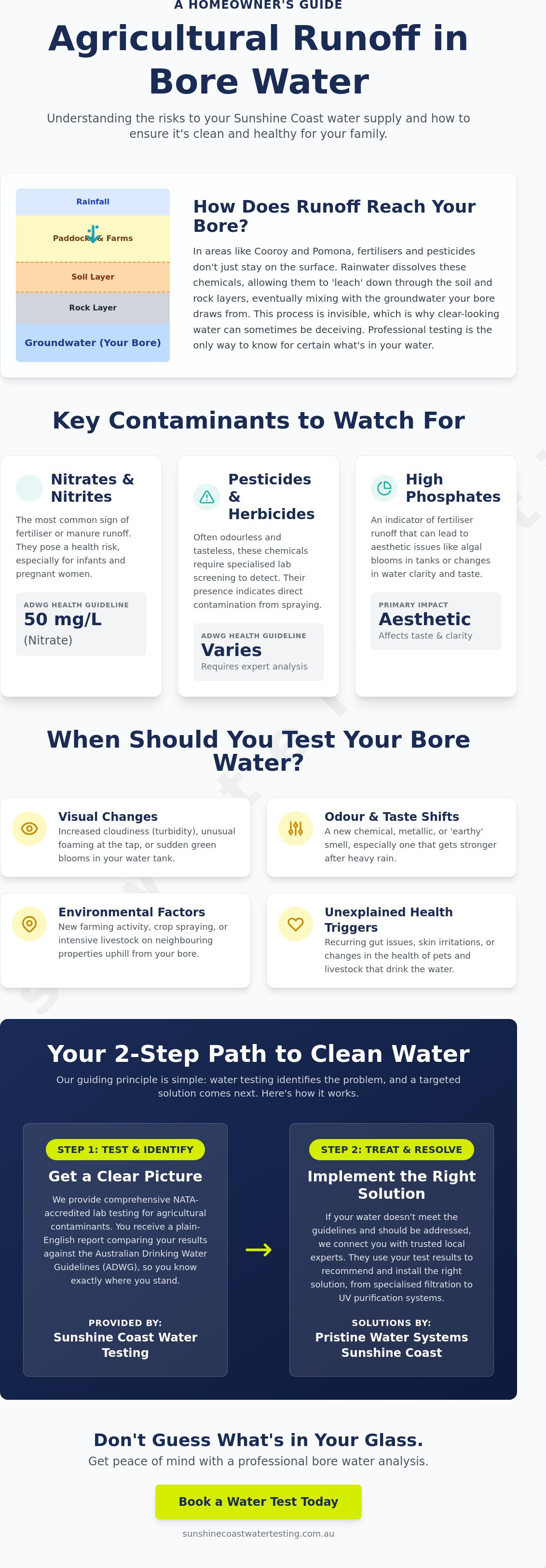
Have you ever looked at the lush green paddocks in Pomona or Tinbeerwah and wondered where all those fertilisers end up? While they are essential for healthy crops, they don't always stay on the surface. Agricultural runoff is a complex mix of fertilisers, pesticides, herbicides, and animal waste. For homeowners relying on groundwater, Understanding Agricultural Runoff is the first step in ensuring a safe household supply. Unlike surface contamination that washes into dams or creeks, groundwater infiltration happens through a process called leaching. This occurs when chemicals dissolve in rainwater and slowly filter down through layers of soil and rock until they reach the water table. Because this process is invisible, professional testing for agricultural runoff in bore water is the only way to know what's actually in your glass.
In rural areas across the Sunshine Coast, the soil types and proximity to farming mean that bores are particularly susceptible to these contaminants. Surface contamination might be obvious after a storm, but deep groundwater infiltration can linger for months or even years. This is why a "clear" looking glass of water can be deceiving. At Sunshine Coast Water Testing, we believe that water testing identifies the problem, while the solution comes next. We provide the data you need to understand if your water meets the Australian Drinking Water Guidelines (ADWG).
Common Contaminants Found in Rural Bores
Nitrates and nitrites are the most frequent indicators of fertiliser or manure runoff. The ADWG sets a health-based guideline for nitrates at 50 milligrams per litre to protect the most vulnerable members of the community. High phosphate levels can also be an issue, often leading to unexpected algal blooms or changes in water clarity. Pesticides and herbicides are more complex. These chemicals require specialised laboratory screening because they are often odourless and tasteless. Our team provides plain-English summaries of these results so you don't have to guess what the numbers mean for your family.
The Role of Rainfall and Seasonal Shifts
Heavy "wet season" downpours often act as a flush, pushing surface chemicals deeper into the ground and eventually into your bore. If you only test your water during a drought, you might get a false sense of security. Contaminant levels can spike significantly after significant rain events. Regular monitoring is vital in active farming communities to track these seasonal shifts. If your test results show that your supply does not meet Australian Drinking Water Guidelines and should be addressed, a local expert like Pristine Water Systems Sunshine Coast can provide the necessary filtration or UV purification to restore your water quality.
Identifying the Signs: When Should You Test Your Bore?
How do you know if your water quality has shifted? Sometimes the signs are obvious, but often they are subtle and easily missed. If you rely on groundwater in areas like Noosa or Doonan, staying alert to changes in your supply is essential. While the Health Department suggests testing private bores at least once every two years, specific "red flags" should prompt immediate action. Professional testing for agricultural runoff in bore water becomes a priority if you notice any of the following:
- Visual changes: Increased turbidity (cloudiness), unusual foaming at the tap, or sudden algal blooms in storage tanks.
- Odour shifts: Distinctly chemical, metallic, or earthy smells that seem to intensify following heavy local rainfall.
- Environmental factors: New intensive cropping, pesticide spraying, or livestock movements on neighbouring properties uphill from your bore.
- Health triggers: Recurring stomach upsets, skin irritations, or unexplained changes in the health of pets and livestock.
If you've noticed any of these changes, the most reliable first step is to book a water test to see exactly what's happening underground. Remember, water testing identifies the problem, while the solution comes next.
Aesthetic vs. Invisible Contaminants
Clear water can be deceiving. Many homeowners assume that if their water looks and tastes fine, it meets the Australian Drinking Water Guidelines (ADWG). This isn't always the case. High levels of nitrates, for example, are completely odourless and colourless. While sand and rock act as a natural filter for sediment, they are often ineffective at stripping away dissolved chemicals. In many rural blocks, it is also wise to consider heavy metals testing alongside runoff analysis, as these can sometimes be stirred up by the same environmental changes that trigger nutrient leaching.
Property Risks for Acreage Owners
The "lay of the land" matters. If your bore sits at a lower elevation than nearby farming paddocks, gravity naturally directs runoff toward your water source. This is particularly relevant for new property owners in Cooroy or Pomona who may not know the history of their land. Old cattle dip sites or abandoned chemical storage sheds can leach contaminants into the soil for decades. Establishing a baseline test when you first move in is the only way to ensure your household supply is managed correctly. Once we've identified the specific issue, a team like Pristine Water Systems Sunshine Coast can then step in to install the right filtration solution to ensure your water meets national standards.
How to Test for Agricultural Runoff: A Step-by-Step Guide
Getting an accurate reading of your groundwater quality starts long before the sample reaches the laboratory. If the collection process is flawed, the results won't reflect the true state of your aquifer. When you are testing for agricultural runoff in bore water, following a precise routine ensures that the data you receive is both reliable and actionable. At Sunshine Coast Water Testing, we provide the specific laboratory-grade bottles and instructions needed to make this process as simple as possible for homeowners in Cooroy and Pomona.
- Step 1: Select the right test. A standard salinity or pH test will not detect complex chemicals. You need a targeted agricultural panel that screens for nitrates, nitrites, and specific pesticides or herbicides common in our region.
- Step 2: Purge the system. You must clear the stagnant water sitting in your pump and pipes. This ensures you are collecting fresh groundwater directly from the source.
- Step 3: Use laboratory-grade containers. Never use household jars or old water bottles. These can leach chemicals or contain residues that trigger a false positive in your report.
- Step 4: Maintain the chain of custody. Some contaminants are light-sensitive or temperature-dependent. Getting your sample to our local collection point quickly is vital for maintaining the integrity of the results.
The Purging Process Explained
Why is purging so important? Water sitting in your plumbing can absorb metals from pipes or grow bacteria that isn't present in the actual bore. This is the most critical step for an accurate bore water quality assessment. We generally recommend running your bore for at least 10 to 20 minutes before taking a sample. You'll know the water has stabilised when the temperature and clarity remain consistent. This simple step ensures we are testing the aquifer, not your kitchen tap's internal washers.
Correct Sampling Techniques
Precision matters. When you are ready to collect, avoid touching the inside of the bottle cap or the mouth of the tap. Even a tiny amount of dirt or sunscreen from your hands can skew the results. Unlike some other tests, you should not "rinse and fill" bottles used for chemical analysis, as some containers are pre-treated with preservatives to "fix" the sample for the lab. Fill the bottle to the very top to exclude any air, and label it immediately with the date and location. Remember, water testing identifies the problem, while the solution comes next. Once we provide your plain-English summary, you'll have a clear path forward.
Comparing Results with Australian Drinking Water Guidelines (ADWG)
Receiving a lab report can feel like reading a different language. You are presented with a multi-page Certificate of Analysis filled with technical abbreviations, scientific notation, and long lists of chemical compounds. How do you actually know if your water is safe for your family? At Sunshine Coast Water Testing, we bridge this gap by providing a plain-English summary alongside your raw data. We compare your specific results against the health-based and aesthetic thresholds defined in the Australian Drinking Water Guidelines (ADWG) to give you a clear, honest assessment of your supply.
When you invest in testing for agricultural runoff in bore water, it is common to see "detectable" levels of certain substances. However, a detection does not always mean there is a danger. The ADWG is a living document that contains health-based guideline values for over 200 different pesticides. These values are often set at very conservative levels to protect public health over a lifetime of consumption. Our reporting focuses on whether these detections are within acceptable limits or if they represent a trend that needs attention. Comparing this year's results to previous seasons is also vital, as it helps identify if runoff is becoming a persistent issue on your property.
Reading Your Nitrate and Pesticide Levels
Most laboratory results are measured in milligrams per litre (mg/L). The ADWG sets a clear health-based limit for nitrate at 50 mg/L. This specific threshold is critical because infants under three months of age are significantly more sensitive to nitrates than adults. We also look for pesticides like Bromoxynil or Simazine, which have their own specific health-based values. We help you distinguish between a "health-based" breach, which affects your safety, and an "aesthetic" breach, which might only impact the taste, colour, or smell of the water.
When Results Indicate a Problem
What should you do if your report shows a breach? If the analysis confirms that your supply does not meet Australian Drinking Water Guidelines and should be addressed, the first step is to manage your exposure. For significant breaches of health-based guidelines, you should stop using the water for drinking or cooking immediately. This level of detail is why professional water analysis is so much more reliable than DIY test strips, which simply cannot detect the tiny concentrations of chemicals that matter.
Remember our core philosophy: water testing identifies the problem, while the solution comes next. If your results show a concern, we can link you with Pristine Water Systems Sunshine Coast to explore targeted filtration or purification options. To get started with a clear picture of your groundwater health, you can book your bore water test here.
From Results to Resolution: Professional Solutions for Bore Water
You've received your report and understood the data. Now what? Many homeowners make the mistake of rushing to buy a generic filter before they truly understand their water chemistry. At Sunshine Coast Water Testing, we champion a "Test, Then Treat" philosophy. This ensures you don't waste money on hardware that isn't designed to handle the specific chemicals present in your ground. Remember, water testing identifies the problem, while the solution comes next. If your report indicates that your supply does not meet Australian Drinking Water Guidelines and should be addressed, you can move forward with a targeted plan rather than a best guess.
Different agricultural contaminants require different mechanical responses. While a simple sediment filter might improve clarity, it won't touch dissolved nitrates or pesticides. Effective testing for agricultural runoff in bore water allows you to choose a solution that actually works. Common professional resolutions include:
- Specialised Chemical Filtration: Using high-grade media to neutralise specific herbicides or pesticides.
- Reverse Osmosis (RO): One of the few effective ways to significantly reduce nitrate levels to meet health-based guidelines.
- UV Purification: Essential if your bore is susceptible to biological runoff, such as bacteria from livestock waste.
- System Sanitisation: Deep cleaning of the bore head and storage tanks to remove existing bio-films.
Implementing Effective Filtration
Once your testing is complete, you need a system designed for your specific acreage needs in areas like Doonan or Tinbeerwah. Activated carbon systems are excellent for removing many chemical residues and improving taste, but they have limits. For more complex issues like high salinity or persistent nitrates, a custom setup is required. We recommend partnering with Pristine Water Systems Sunshine Coast to design a filtration setup based on your lab results. They provide the hardware and expertise to fix exactly what our analysis finds, ensuring your household supply is managed correctly from the start.
Long-Term Bore Management
Groundwater is not static. A single test provides a snapshot, but agricultural patterns on neighbouring farms can change. Organising an annual health check is a smart way to monitor for shifting levels of runoff. By combining the plain-English summaries from Sunshine Coast Water Testing with the professional solutions from Pristine Water Systems Sunshine Coast, you stay in control of your water health.
In summary, ensuring your bore water is fit for purpose is a straightforward process when you follow the right steps. Start with a professional lab test to identify any contaminants, use our plain-English report to understand the impact, and then implement a targeted solution. This logical path provides the ultimate peace of mind for your family and your property.
Secure Your Household Water Health
Managing a rural property in the Sunshine Coast hinterland comes with unique responsibilities, particularly when it involves your family's drinking supply. As we've explored, invisible contaminants like nitrates and pesticides can leach into aquifers long before you notice a change in taste or smell. Professional testing for agricultural runoff in bore water is the only way to move from uncertainty to action. By benchmarking your results against the Australian Drinking Water Guidelines (ADWG), you gain a clear understanding of whether your supply meets national standards.
At Sunshine Coast Water Testing, we don't just provide raw data. Every report includes a plain-English summary and specialist advice tailored for acreage owners in areas like Cooroy and Pomona. Remember, water testing identifies the problem, while the solution comes next. If your analysis shows that your water does not meet Australian Drinking Water Guidelines and should be addressed, we'll help you bridge the gap to a resolution with local experts like Pristine Water Systems Sunshine Coast. Take the guesswork out of your groundwater management and ensure your supply is as healthy as it looks.
Book your professional bore water assessment today and enjoy the peace of mind that comes with expert local knowledge.
Frequently Asked Questions
Is it normal for bore water to smell like fertiliser after heavy rain?
It is not normal and usually indicates that surface water is bypassing natural soil filters to enter your aquifer. This often happens due to a faulty bore casing or significant leaching from nearby paddocks in areas like Pomona or Doonan. If you notice a chemical or "earthy" smell after a storm, it's a strong indicator that you need professional testing for agricultural runoff in bore water to check for nitrates and pesticides.
Can I use bore water with high nitrates for my vegetable garden?
Yes, you can generally use it for irrigation, but you should be mindful of the crops you are growing. While high nitrates act as a liquid fertiliser that can boost growth, they can also accumulate in the leaves of crops like spinach and lettuce. If your test results show nitrate levels above 50 mg/L, we recommend getting a specialist summary from Sunshine Coast Water Testing to understand how this affects your specific garden use.
How often should I be testing for agricultural runoff in my bore?
The general health recommendation is to test your bore at least once every two years to establish a reliable baseline. However, if you live in a high-activity farming area like Cooroy or Tinbeerwah, you should consider more frequent checks after significant weather events or land-use changes next door. Regular monitoring ensures you catch seasonal shifts in chemical concentrations before they impact your household supply.
Will a standard water filter remove pesticides from my bore water?
A standard sediment or "whole house" filter is typically designed to catch dirt and rust, not dissolved chemicals. To effectively remove pesticides or herbicides, you usually require an advanced system like activated carbon or reverse osmosis. This is why testing identifies the problem first. Once the specific contaminant is known, Pristine Water Systems Sunshine Coast can install the correct hardware to fix it.
What is the most dangerous chemical found in agricultural runoff?
Nitrates are often the most critical concern for homeowners because they are odourless and colourless, yet they pose specific health risks to infants and the elderly. High concentrations can interfere with the blood's ability to carry oxygen. Other chemicals, such as organophosphate pesticides, also require careful monitoring. We benchmark all these levels against the Australian Drinking Water Guidelines (ADWG) to provide you with a clear safety assessment.
Can I test my own bore water using a kit from a hardware store?
DIY kits from hardware stores are generally unsuitable for detecting complex agricultural chemicals. These kits often lack the sensitivity required to measure pesticides or nitrates at the low levels defined by the ADWG. For an accurate result, you need a NATA-accredited laboratory analysis. Sunshine Coast Water Testing provides these professional tests along with a plain-English summary so you actually understand the data.
How deep does a bore need to be to avoid surface runoff contamination?
There is no specific "safe" depth, as even deep bores can be contaminated if the wellhead isn't sealed correctly or if the local geology allows for rapid leaching. While deeper aquifers are often better protected, they are not immune to chemical infiltration. Testing for agricultural runoff in bore water is the only way to confirm that your specific depth and location are providing a supply that meets national standards.
What should I do if my test results show the water does not meet ADWG standards?
If your results show that your water does not meet Australian Drinking Water Guidelines and should be addressed, you should immediately stop using it for drinking or food preparation. Your next step is to look at a permanent treatment solution. We work closely with Pristine Water Systems Sunshine Coast, who can use your lab results to design a filtration or UV purification system that brings your water back into compliance.

Article by
Stephen McDougall
Stephen McDougall is the owner of Pristine Water Systems Sunshine Coast and Sunshine Coast Water Testing, specialising in water quality, filtration, and tank systems. He is known for delivering clear, easy-to-understand advice and practical solutions to help clients maintain safe, reliable water.
Disclaimer
The information provided in this article is for general guidance only and is not a substitute for professional water testing or site-specific advice. Water quality can vary between properties. For accurate results and recommendations, we recommend professional testing and assessment.